


Position: Home > Applications > Building & Construction
Aluminum sheet and coil are widely used in architectural facade cladding, exterior wall panels, curtain wall components and ventilated rainscreen systems. They give architects and fabricators flexibility in panel shape, surface finish and color while keeping the weight of the exterior cladding relatively low.
However, not every aluminum sheet or coil is suitable for the same facade system. A folded solid aluminum cassette panel, a roll-formed wall profile and an aluminum composite panel may all use aluminum, but their material thickness, alloy, temper, surface treatment and fabrication requirements are different.
For most solid aluminum facade panels, 3003, 5005 and 5052 are useful alloys to consider, with 2.0 mm, 2.5 mm and 3.0 mm being common project thicknesses. For roll-formed cladding and composite panel production, prepainted aluminum coil is often more suitable, with the final gauge determined by the panel design and manufacturing process.
Henan Worthwill Industry Co., Ltd. supplies aluminum sheet, aluminum coil, prepainted aluminum and custom solid aluminum facade cladding panels for architectural and industrial projects. This guide explains how to select the material before cutting, forming, coating or panel fabrication begins.
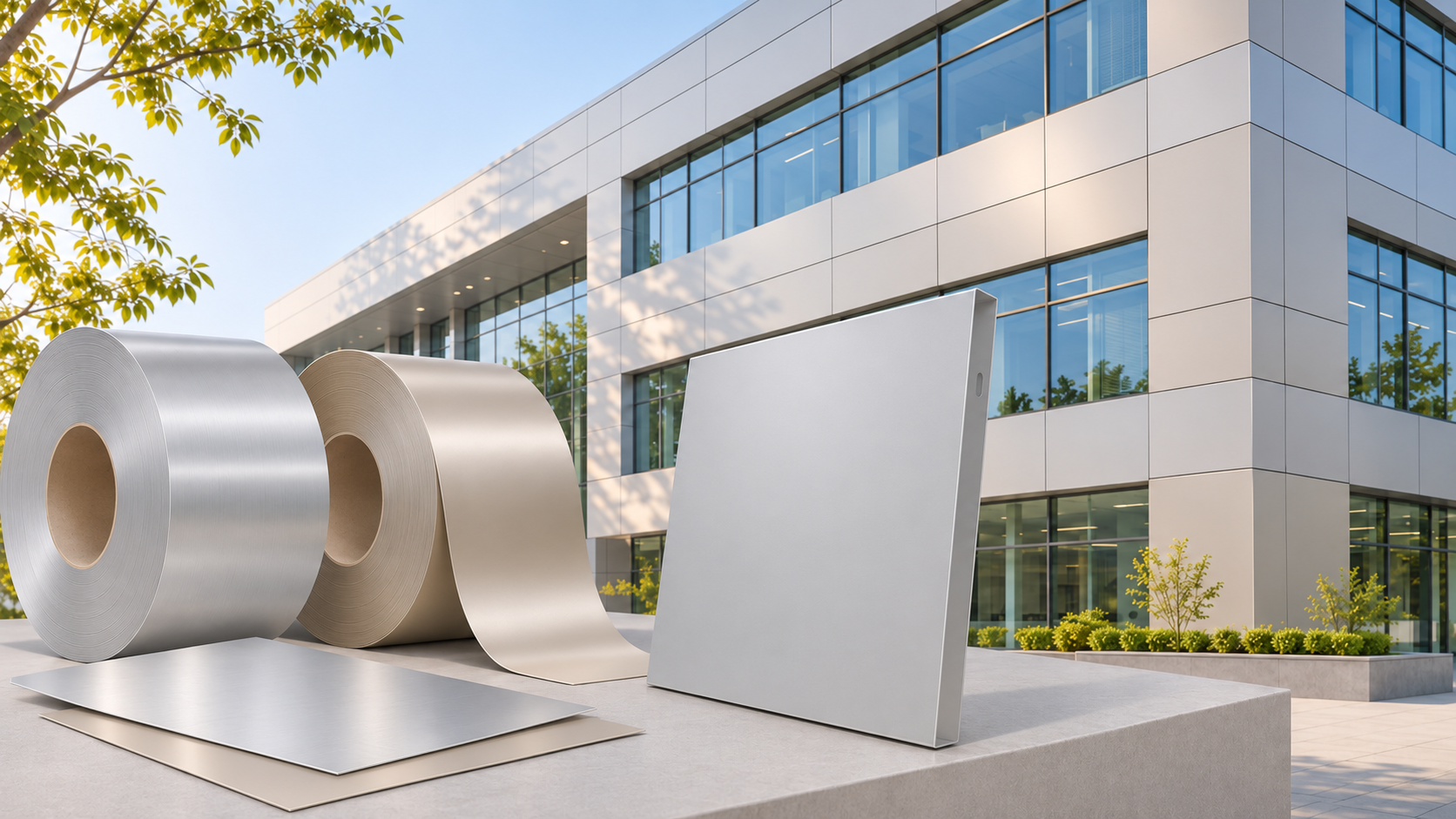
Architectural facade cladding refers to the exterior covering installed over a building’s supporting wall or structural system. Depending on the design, it may provide weather protection, shading, architectural appearance or a combination of these functions.
Aluminum flat-rolled materials can be used in several different facade constructions:
• Solid aluminum cladding panels: Aluminum sheets are cut, folded and fabricated into flat panels, cassette panels, curved sections or perforated facade elements.
• Roll-formed aluminum wall cladding: Aluminum coils are formed continuously into ribbed, corrugated, standing-seam or other profiled wall components.
• Aluminum composite panels: Thin aluminum facings are bonded to a separate core to create composite panels with different stiffness, weight and fire-performance characteristics.
• Aluminum honeycomb panels: Aluminum face sheets are combined with a honeycomb core to create lightweight sandwich panels for selected architectural applications.
• Architectural trims and accessories: Aluminum sheet and slit coil can be processed into flashings, column covers, fascias, soffits and other facade finishing components.
These applications should not be treated as interchangeable. The selection of aluminum stock must follow the construction of the finished panel and the performance requirements of the complete facade system.
The first decision is often whether to purchase aluminum in sheet or coil form. Neither form is automatically better. The right choice depends on how the material will be processed.
| Selection Factor | Aluminum Sheet | Aluminum Coil |
|---|---|---|
| Typical Processing | CNC cutting, punching, bending, folding and panel fabrication | Continuous roll forming, profiling, slitting and lamination |
| Typical Facade Products | Solid panels, cassette panels, curved panels and custom architectural components | Profiled wall panels, facade strips, composite-panel facings and flashing |
| Material Handling | Individual sheets are easier to process in batch panel fabrication | Continuous feeding supports high-volume production with suitable equipment |
| Surface Finish | Mill finish, prepainted, anodized or post-fabrication coated | Mill finish or coil-coated surface, including project-approved exterior coatings |
| Main Selection Point | Panel dimensions, flatness, strength and bending requirements | Coil width, temper, forming performance and production-line compatibility |
For a project involving large numbers of folded facade cassettes, cut-to-size aluminum sheet may be the practical starting point. For a factory producing long wall profiles or composite panels, coil supply usually offers a more efficient production route.
Facade manufacturers commonly consider 1100, 3003, 3004, 3005, 3105, 5005 and 5052 aluminum alloys. The best choice depends on the fabrication process, structural design, visible finish and service environment.
| Alloy | Material Characteristics | Suitable Facade Applications |
|---|---|---|
| 1100 | Excellent workability and good corrosion resistance; relatively low strength | Decorative sheets, formed architectural components and applications with modest strength requirements |
| 3003 | Good balance of formability, strength and corrosion resistance | Solid aluminum facade panels, folded cassettes, painted cladding and formed wall components |
| 3004 / 3005 / 3105 | Practical strength and forming characteristics for architectural sheet and coil products | Prepainted wall cladding, roll-formed panels, profiles and architectural trims |
| 5005 | Good decorative surface potential and corrosion resistance; suitable grades are often selected for anodizing | Anodized architectural sheet, decorative facades, cassette panels and exposed metal finishes |
| 5052 | Higher strength and good corrosion resistance; forming limits depend on temper | Facade components requiring additional strength, exposed architectural panels and selected demanding environments |
3003 is a practical starting point for many painted solid aluminum facade panels. It offers useful forming performance for cutting, folding and cassette fabrication without requiring a high-strength alloy for every project.
The temper must still be matched to the panel design. H14 and H24 are among the conditions that may be considered, but the final selection depends on bend radius, panel size and required mechanical properties.
When the project calls for a natural metallic or anodized appearance, 5005 is often worth evaluating. Its suitability for decorative anodizing makes it useful for architectural panels where surface appearance is particularly important.
The substrate should be ordered in an agreed anodizing-quality condition. A generic mill-finish sheet does not automatically provide the same visual consistency after anodizing.
5052 can be considered where a panel or architectural component needs higher mechanical strength or good resistance to demanding environments. However, higher strength does not mean that 5052 is always the better cladding material.
For panels with tight bends or complicated shapes, the selected temper, minimum bend radius and fabrication method should be checked before bulk production.
Aluminum thickness has a direct influence on panel rigidity, weight, forming performance and material cost. It should be selected according to the finished cladding construction rather than copied from an unrelated facade project.
| Cladding Construction | Thickness Guidance | Important Considerations |
|---|---|---|
| Solid Aluminum Facade Panels | 2.0, 2.5 and 3.0 mm are common project choices | Panel dimensions, wind load, folded edges, reinforcement and fixing design |
| Roll-Formed Wall Cladding | Project-specific coil gauge according to the profile and engineering design | Rib geometry, span, support spacing, forming process and coating flexibility |
| Aluminum Composite Panel Facings | Skin thickness determined by the approved composite-panel specification | Core type, skin thickness, bonding compatibility and complete-system performance |
| Aluminum Honeycomb Panel Facings | Face-sheet thickness determined by the sandwich-panel design | Core thickness, bonding, stiffness, span and panel construction |
The listed solid-panel thicknesses are common material-selection starting points, not universal engineering requirements. A larger panel may need greater thickness, folded returns, stiffeners or closer supports. Conversely, a properly designed profiled panel may achieve the required stiffness using a different gauge.
For large, highly visible facade areas, the possibility of oil canning should also be considered. This refers to visible waviness or distortion in relatively flat metal surfaces, which can become noticeable under certain lighting conditions. Suitable material flatness, panel dimensions, temper and support details help control its appearance.
For an exterior facade, choosing the right surface finish is often as important as choosing the aluminum alloy. The finish affects color retention, weather resistance, cleaning requirements and the appearance of the building over time.
PVDF coated aluminum is commonly specified for architectural facades exposed to strong sunlight, rain, humidity and demanding outdoor conditions. It is especially relevant for commercial buildings, curtain wall components and projects where long-term appearance is important.
However, a PVDF label alone is not a complete coating specification. The paint formulation, primer, pretreatment, coating thickness, number of coats and required performance standard should all be agreed before ordering.
Worthwill supplies PVDF coated aluminum coil and sheet for architectural material processing. Coil-coated material may be suitable for subsequent forming when the substrate temper, coating flexibility and bend requirements are compatible.
High-durability polyester, or HDP, may be a practical option for exterior wall cladding where the project requires improved weather resistance without specifying a premium fluoropolymer system.
Standard PE polyester coatings are more commonly considered for interior panels, protected areas and general decorative applications. They should not automatically be treated as equivalent to an exterior architectural PVDF system.
For a detailed explanation of their differences, see our PE vs HDP vs PVDF coated aluminum comparison.
Powder coating is often applied after panel cutting and fabrication. It offers a broad selection of colors, gloss levels and textures, while the specified powder system must be suitable for the actual outdoor environment.
Anodizing provides a metallic appearance that differs from an opaque paint finish. It can be suitable for decorative facade components, but alloy quality, surface preparation and batch consistency are particularly important.
For metallic, wood-grain or stone-look effects, the buyer should approve a physical finish sample. Color references alone may not accurately communicate the appearance of the finished panel under different lighting conditions.
A facade sheet or coil may meet the ordered alloy and thickness requirements yet still perform poorly during fabrication if the actual processing conditions were not considered. The following points should be reviewed before production.
Folded cassette panels and roll-formed profiles place strain on the aluminum and, where present, its coating. The bend radius must suit the substrate alloy, temper and finish.
For prepainted material, coating adhesion and forming performance should be confirmed using an agreed test method or production sample. A coating that performs well on a flat sheet may not be suitable for every sharp fold.
Architectural cladding is often viewed across large elevations under changing daylight. Local waviness, scratches, dents and surface marks may therefore be more noticeable than they would be in ordinary industrial sheet applications.
Specify the required flatness and visible surface condition before production. Protective film, suitable handling procedures and appropriate packing can help reduce damage during cutting, transport and installation.
Aluminum expands and contracts as temperature changes. Facade joints, fixing slots and support connections must allow this movement without creating excessive stress or distortion.
As a simplified illustration, a 3 m long aluminum component with a temperature change of 60°C may experience approximately 4 mm of length change, using a typical thermal expansion coefficient of about 23 × 10-6/°C. Actual movement allowances must be determined by the facade designer.
Large facade projects may contain hundreds or thousands of visible panels. Even small variations in color, gloss or metallic direction can become obvious when neighboring panels are installed.
For important architectural elevations, buyers should consider an approved reference sample, agreed color tolerance, production batch control and consistent panel orientation. A full-size mock-up may be necessary for demanding visual requirements.
Coastal buildings require attention to salt exposure, pretreatment, coating performance, cut edges and maintenance. The surface coating should be selected as part of the complete corrosion-protection strategy.
Where aluminum contacts dissimilar metals, compatible fasteners, isolation materials and suitable detailing may be needed to reduce the risk of galvanic corrosion. Drainage and trapped moisture should also be considered.
Architectural aluminum must be assessed within the requirements of the actual building project. Material selection should not be based on simplified claims such as “fireproof aluminum facade” or “PVDF coating guarantees building compliance.”
Fire safety: Solid aluminum panels do not contain the bonded core used in aluminum composite panels. However, the fire performance of the complete facade depends on the wall construction, insulation, membranes, cavity barriers, coatings and other components. Where applicable, the responsible design team must verify compliance with relevant building regulations and assembly fire-test requirements, such as NFPA 285.
Coil-coated aluminum: EN 1396:2023 provides requirements for coil-coated aluminum and aluminum alloy sheet and strip for general applications. The standard should be referenced only where it is applicable to the ordered material and agreed specification.
Architectural coating performance: AAMA 2604 and AAMA 2605 are commonly referenced coating performance specifications for architectural aluminum. The applicable edition, substrate, coating process, test requirements and supporting documentation should be confirmed. A specified coating type does not automatically establish compliance.
Structural and weather performance: Wind resistance, fixing design, water management, air leakage and thermal performance must be evaluated for the complete cladding or curtain wall assembly rather than inferred from the aluminum sheet alone.
Aluminum sheet and coil are used across a wide range of building types. The preferred material depends on the required appearance, installation system and exposure conditions.
• Commercial office buildings: Solid aluminum cassettes, opaque curtain wall components and decorative aluminum wall panels.
• Airports and transportation buildings: Large facade areas, entrance features, column covers, soffits and architectural screening.
• Hotels and residential developments: Balcony fascias, exterior decorative cladding, entrance canopies and architectural trims.
• Industrial and logistics buildings: Prepainted aluminum wall profiles, exterior cladding panels and building-envelope accessories.
• Renovation and architectural features: Lightweight facade refurbishment, perforated screens, curved panels and custom decorative elements.
For more demanding architectural environments, material appearance and performance should be reviewed alongside the facade design rather than treated as separate purchasing decisions.
Worthwill supplies aluminum materials for facade panel manufacturers, building-material processors, distributors and project-based buyers.
Available material categories include mill finish aluminum sheet and coil, prepainted aluminum sheet and coil, selected decorative finishes and project-specific fabricated facade panels. The exact alloy, temper, dimensions and finish depend on the order requirements.
For exterior architectural projects, buyers can start with our color coated aluminum coil and sheet range and specify a suitable coating system according to the project exposure and manufacturing process.
To help select a suitable material and prepare an accurate quotation, please provide the following information:
• Application: Solid facade panel, cassette, roll-formed wall cladding, composite-panel facing or other architectural component.
• Material: Preferred aluminum alloy and temper, or the required fabrication and mechanical performance.
• Dimensions: Thickness, width, sheet length, coil dimensions or finished panel drawings.
• Surface finish: Mill finish, PVDF, HDP, polyester, powder coating, anodizing or another approved finish.
• Appearance: Color reference, gloss, surface texture, metallic direction and approved samples where necessary.
• Project conditions: Destination, coastal or industrial exposure, applicable standards and any required test documentation.
• Order details: Quantity, delivery destination, packaging requirements and project schedule.
For regular aluminum sheet and coil orders, the typical minimum order quantity is 3 metric tons. Custom colors, coatings and fabricated panel projects may have different production requirements and should be confirmed during quotation.
3003 is a common starting point for formed and painted solid aluminum facade panels. 5005 is often considered for anodized architectural finishes, while 5052 may be selected where higher strength or particular environmental requirements are important. Final selection depends on temper, panel geometry and engineering requirements.
Both can be used in suitable solid-panel designs. The correct thickness depends on panel dimensions, wind load, reinforcement, support spacing and installation details. A 3 mm sheet is not automatically required for every facade, and a 2 mm sheet is not automatically suitable for every large panel.
Yes. Aluminum coil is suitable for many roll-formed wall panels, composite-panel facings and continuous architectural profiles. It can also be cut into sheets for selected fabrication processes. The appropriate coil gauge, alloy, temper and coating must match the manufacturing equipment and final panel design.
No. PVDF is commonly considered for premium exterior facades and demanding weather exposure, but HDP or other project-approved coating systems may be suitable in different conditions. The project specification should define the required appearance, durability and coating performance.
Solid aluminum cladding is made from a single aluminum sheet. Aluminum composite panels have two aluminum facings bonded to a separate core. They differ in fabrication, stiffness, weight, repair methods and fire considerations. The correct selection depends on the approved facade system and applicable building regulations.
Use an agreed reference sample, specify realistic color and gloss tolerances, control production batches where possible and maintain consistent panel orientation. Metallic and directional finishes may require additional review using a facade mock-up.
A successful architectural facade begins with material that matches the finished panel design. Alloy, temper, gauge, coating and surface appearance should be decided together with the fabrication process and project requirements.
Worthwill supplies aluminum sheet, coil and selected fabricated facade panels for international building-material buyers and manufacturers. Share your material specification, drawings or project requirements with our team so we can review the suitable supply options.
Contact Worthwill: Request a Quote or email admin@worthwillal.com.