Download Products Catalogue
Related Products



Position: Home > Products > Mill Finish Aluminum


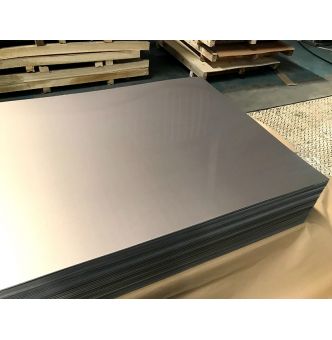
Worthwill supplies 3003 mill finish aluminum sheet and coil for manufacturers, fabricators and industrial buyers. This non-heat-treatable aluminum-manganese alloy offers a practical combination of formability, corrosion resistance and moderate strength. It is commonly selected for roofing and cladding components, HVAC ductwork, cookware, enclosures and general sheet-metal fabrication.
Available forms include flat sheet, cut-to-length sheet, plate and coil, with O, H14, H24 and other tempers to suit different forming requirements. The published 0.2–10 mm thickness range covers multiple product forms and does not apply to coil throughout. Send us your required temper, thickness, width, length or coil details, quantity and application for a specification-based quotation.
3003 aluminum is a 3xxx-series wrought alloy with manganese as its main alloying element. It is stronger than commercially pure 1100 aluminum in comparable conditions while retaining good bending, drawing and welding characteristics. Because 3003 is non-heat-treatable, its strength is adjusted mainly through cold working and temper selection rather than solution heat treatment.
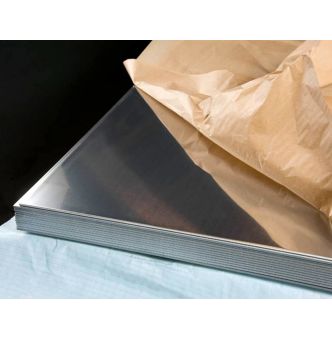
"Mill finish" describes the surface left by rolling, before painting, anodizing or applying a decorative finish. Its appearance can vary with production conditions and may show normal rolling marks. Mill finish is not the same as mirror-polished or brushed aluminum.
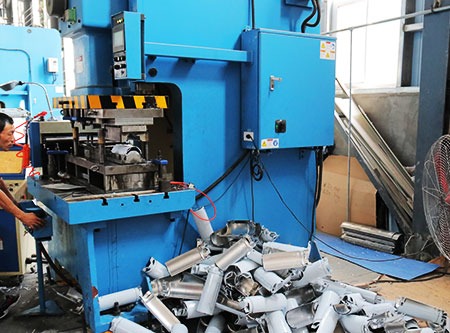
3003 aluminum sheet: Flat material for cutting, bending, punching and stamping. It is suitable for fabricated covers, panels, duct components and cookware parts.
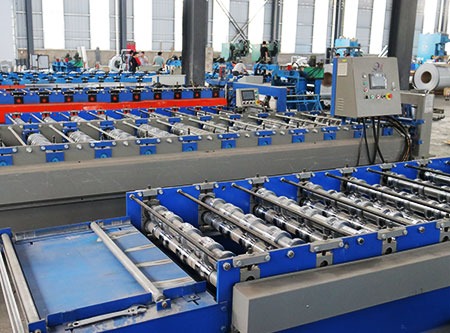
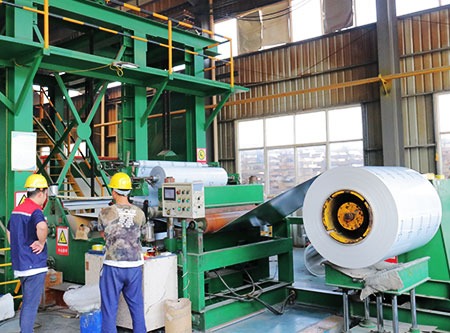
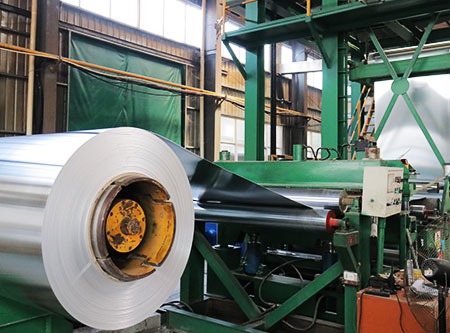
3003 aluminum coil: Continuous rolled material for slitting, roll forming and repeat production. Buyers should specify coil width, thickness, inner diameter and target coil weight when relevant.
3003 aluminum plate: Thicker flat material for applications that require greater section thickness. Plate availability, temper and processing options should be confirmed against the actual thickness and order quantity.
The original Worthwill catalog lists an overall thickness range of 0.2–10 mm. This is a combined catalog range, not a promise that every thickness is offered in every form. Coil production is restricted to suitable rolling gauges; very thick material belongs to the plate category.
Good formability: Suitable for bending, spinning, drawing and stamping, especially in softer tempers. Actual forming limits depend on thickness, grain direction and tooling.
Corrosion resistance: Performs well in many atmospheric and freshwater environments. For sustained saltwater contact or more demanding marine service, a suitable 5xxx-series alloy such as 5052 may be preferable.
Moderate strength: Offers a useful balance of strength and workability for non-structural and light-duty fabricated components. It should not be treated as a substitute for a high-strength structural alloy without engineering review.
Weldability and fabrication: Can be joined using suitable welding methods and fabricated by common sheet-metal processes. Welding procedures and performance requirements should be verified for the finished part.
Coating compatibility: Mill finish sheet or coil can serve as a substrate for subsequent coating or other surface processing when appropriate preparation and process controls are used.
Temper affects the balance between strength and formability. The following table provides a practical starting point for selecting 3003 aluminum sheet and coil.
| Temper | Condition | Typical Selection Reason |
|---|---|---|
| 3003-O | Annealed (soft) | Deep drawing, spinning and parts requiring substantial forming |
| 3003-H14 | Strain-hardened, half-hard | General sheet-metal parts needing a balance of strength and bendability |
| 3003-H24 | Strain-hardened and partially annealed, half-hard | Formed sheet and coil products requiring a half-hard temper |
| 3003-H18 | Strain-hardened, full-hard | Applications prioritizing stiffness over extensive forming |
Other published tempers include H12, H16, H26, H28 and H112. Availability depends on thickness and supply form. H14 and H24 have similar nominal strength levels but are produced by different tempering routes; they should not be treated as automatically interchangeable in a qualified manufacturing process.
3003 is an aluminum-manganese alloy, with manganese and a small copper addition. The following nominal composition limits are given by mass percentage; the applicable material certificate and ordered specification should govern acceptance.
| Element | Composition (wt. %) |
|---|---|
| Manganese (Mn) | 1.0–1.5 |
| Copper (Cu) | 0.05–0.20 |
| Silicon (Si) | 0.60 max. |
| Iron (Fe) | 0.70 max. |
| Zinc (Zn) | 0.10 max. |
| Aluminum (Al) | Remainder |
The typical density of 3003 aluminum is approximately 2.73 g/cm³. Mechanical properties such as tensile strength and elongation vary with temper and thickness; request the applicable standard and test certificate instead of relying on a single universal value.
Roofing and building components: Formed flashing, roofing accessories, cladding parts and architectural trim where workability and general corrosion resistance are needed.
HVAC and ventilation: Duct components, housings, covers and formed parts for air-handling systems.
Cookware and kitchen equipment: Drawn or spun components made from appropriately specified material, with any food-contact and surface requirements checked for the destination market.
General industrial fabrication: Enclosures, guards, equipment covers, stamped parts and other non-structural components.
Heat-transfer and processing equipment: Selected formed parts, covers and housings where aluminum's thermal properties are useful and the final design has been verified.
Coated and embossed products: 3003 can be used as a base alloy for suitable color coated aluminum sheet and coil or stucco embossed aluminum, depending on the processing route and application.
These alloys can look similar in mill finish condition, but they are chosen for different requirements.
| Alloy | Key Advantage | When to Consider It |
|---|---|---|
| 1100 | Very good formability and conductivity; lower strength | Choose when soft forming or conductivity matters more than strength |
| 3003 | Moderate strength, good formability and general corrosion resistance | Choose for general sheet-metal forming, covers, roofing components and cookware |
| 5052 | Higher strength and better resistance to marine exposure | Choose for more demanding formed parts or salt-exposed applications |
Explore the 1100 mill finish aluminum and 5052 mill finish aluminum pages if you are comparing base-alloy options.
Worthwill supplies mill finish 3003 aluminum in forms and dimensions agreed for each order. For material certification, buyers may specify applicable requirements such as ASTM B209/B209M or EN 573 and EN 485, together with the required alloy, temper, dimensional tolerances and inspection documents. Compliance should be confirmed on the quotation and purchase order.
Dimensions: State thickness × width × length for sheet or plate, or thickness × width × coil for rolled material. Confirm whether width includes slit coil.
Surface and edges: Specify acceptable rolling marks, cleanliness, flatness, edge condition and protective film requirements where relevant.
Processing: Identify any slitting, cut-to-length processing or special packaging needed before delivery.
Order details: Include alloy and temper, size, quantity, destination, intended application and required certification in the RFQ. A typical bulk-order MOQ is around 3 metric tons, subject to the final specification and availability.
For a wider alloy selection, view our mill finish aluminum products.
Both are half-hard tempers. H14 is strain-hardened, while H24 is strain-hardened and partially annealed. Choose the temper specified on the drawing or confirm it through forming trials before substitution.
3003 is commonly used in normal outdoor atmospheric conditions, but exposure, design and surface protection matter. For long-term saltwater or highly corrosive exposure, consider a more suitable alloy and coating system.
Yes. Worthwill offers 3003 in sheet, plate and coil forms, subject to the requested temper, thickness, width and order quantity. The full catalog thickness range does not apply to coil.
Please send the supply form, temper, thickness, width, sheet length or coil requirements, quantity, destination and intended application. Include any surface, tolerance, processing or certificate requirements.
| Item | Specification |
|---|---|
| Product Name | 3003 Mill Finish Aluminum Sheet, Plate and Coil |
| Alloy | AA 3003 / EN AW-3003 / UNS A93003 |
| Product Form | Flat sheet, cut-to-length sheet, plate, coil and slit coil (by order) |
| Temper | O, H12, H14, H16, H18, H24, H26, H28, H112; availability depends on form and thickness |
| Published Thickness Range | 0.2–10 mm across multiple product forms; not a coil-wide range. Confirm thickness for each requested form. |
| Published Width Range | 20–2200 mm; actual availability depends on form, gauge and slitting requirements |
| Sheet / Plate Length | 500–11000 mm, subject to available thickness and processing |
| Coil Length | Continuous coil (C); specify coil inner diameter and target coil weight where required |
| Surface Finish | Natural mill finish (uncoated, non-anodized) |
| Processing Options | Slitting and cut-to-length processing subject to order requirements |
| Typical Density | Approximately 2.73 g/cm³ |
| Relevant Standards | ASTM B209/B209M; EN 573 and EN 485, as applicable to the ordered specification |
| Typical Applications | Roofing components, HVAC ductwork, cookware components, enclosures, general sheet-metal fabrication |
| Typical MOQ | About 3 metric tons; subject to specification and availability |
| Quotation Requirements | Form, temper, thickness, width, length or coil details, quantity, destination, application and certificate requirements |
Specification note: These are published catalog ranges, not a guarantee of every size-temper-form combination. Final supply specifications and tolerances must be confirmed before ordering.
Send us your product, alloy, size, quantity and application requirements for a detailed quotation.