Download Products Catalogue
Related Products



Position: Home > Products > Mill Finish Aluminum
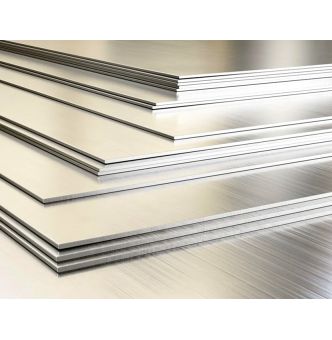


1100 mill finish aluminum sheet and coil are commercially pure AA1100 products containing at least 99.0% aluminum. They offer excellent formability, good corrosion resistance, and useful thermal and electrical conductivity for industrial fabrication.
Henan Worthwill Industry Co., Ltd. supplies 1100 aluminum sheet, coil, plate, slit strip, and cut-to-size material in O, H14, H24, and other available tempers. Size, surface, tolerances, and processing are confirmed according to the application and order specification.
Typical uses include deep-drawn parts, heat-exchanger components, signs, fabricated covers, and chemical-processing equipment. Standard MOQ is usually 3 metric tons; request a quotation with your alloy, temper, dimensions, quantity, and destination.
1100 aluminum is a commercially pure, non-heat-treatable alloy containing at least 99.0% aluminum. It is chosen for easy forming, good corrosion resistance, and useful thermal and electrical conductivity rather than high structural strength. Henan Worthwill Industry Co., Ltd. supplies AA1100 aluminum sheet, coil, plate, slit strip, and cut-to-size material for industrial fabrication and downstream processing.
For most buyers, the key questions are which temper will survive the forming operation, what surface condition the finished part needs, and whether the thickness and tolerances match the production line. Those details matter more than the alloy name alone.
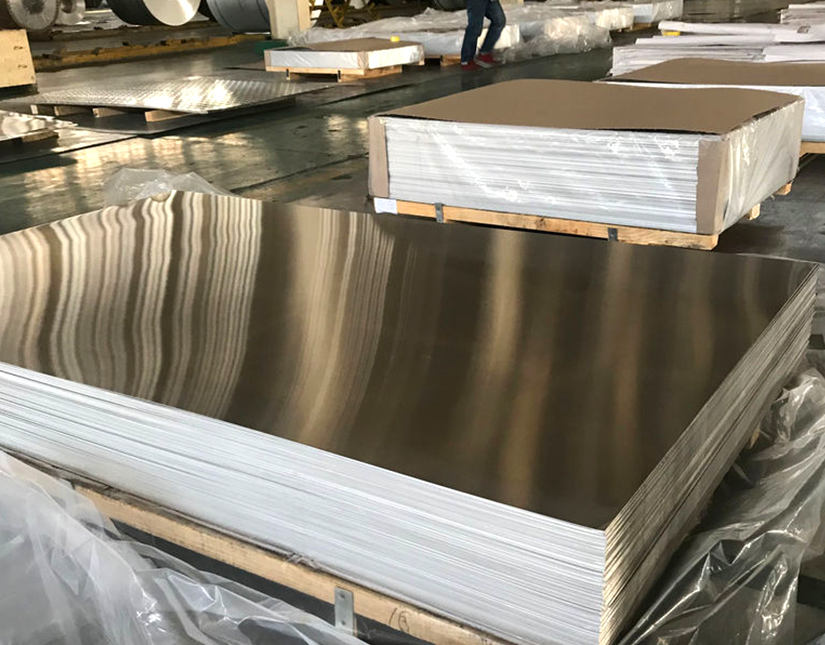
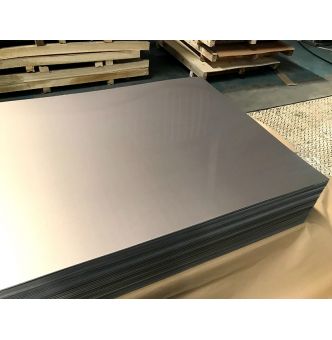
Mill finish is the natural surface left by rolling, without decorative paint, anodizing, or mirror polishing. It generally has a metallic appearance and may show light rolling lines or normal handling marks. An industrial mill finish should not be confused with a guaranteed cosmetic, mirror, or coating-ready finish.
1100 mill finish aluminum can be supplied for direct fabrication or used as a base material for brushing, polishing, embossing, anodizing, or coating. If the part will remain visible, specify the required surface appearance, inspection side, protective film, and acceptable marks before ordering.
In the annealed O temper, 1100 aluminum has high ductility for spinning, deep drawing, and more demanding bends. Cold-worked tempers, such as H14 and H18, provide greater strength but less elongation. The right choice depends on bend radius, drawing depth, thickness, grain direction, and the customer's forming equipment.
The naturally formed oxide film gives 1100 good resistance in many ordinary atmospheric and industrial environments. Its relatively high conductivity makes it useful in heat-transfer parts and certain electrical components. Typical reference values are approximately 220-222 W/m·K thermal conductivity and 59% IACS electrical conductivity; these are not guaranteed test results for every product condition.
AA1100 can be welded using suitable processes and procedures. However, it is comparatively soft, has limited machinability, and is not a substitute for higher-strength alloys where substantial mechanical loading is involved. Corrosion performance in chemicals must be checked against the actual medium, concentration, and temperature.
The temper controls the balance between strength and workability. O, H14, and H24 are frequently discussed for sheet-metal purchasing, but H14 and H24 do not describe identical processing histories and should not be substituted without checking the material specification.
| Temper | General Character | Common Selection Reason |
|---|---|---|
| O (Annealed) | Softest; highest formability | Deep drawing, spinning, demanding bends |
| H12 | Quarter-hard, strain-hardened | Light formed parts requiring more strength than O |
| H14 | Half-hard, strain-hardened | General sheet-metal work, signs, panels |
| H24 | Strain-hardened and partially annealed to half-hard | Selected forming and coil-processing requirements |
| H18 | Full-hard; reduced formability | Flatter or lightly formed parts needing higher strength |
Other tempers, including H16, H22, H26, H28, and suitable plate conditions, may be reviewed according to production feasibility. Do not choose a temper from the designation alone: request the applicable mechanical-property limits for the exact gauge and standard.
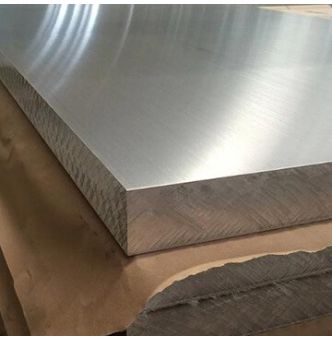
Flat 1100 aluminum sheets are used for stamping, forming, fabricated covers, signage, and industrial equipment. Plate is available for selected heavier-gauge applications where low-to-moderate strength is acceptable. Confirm plate temper, thickness, flatness, and testing requirements before using it in an engineered part.
1100 aluminum coil is suitable for continuous stamping, roll forming, slitting, and cut-to-length production. Coil buyers should provide thickness, width, inside diameter, outside-diameter or weight limits, edge condition, and winding requirements. For narrow-width applications, see our aluminum strip range.
Our existing catalog lists an overall thickness scope of 0.1-500 mm, widths of 10-2650 mm, and cut lengths of 500-11000 mm across different forms. These figures are not a single continuous stocked range: sheet, coil, strip, and heavy plate have different practical limits. Unusually wide, thin, or thick specifications require a feasibility check.
Deep-drawn and spun parts: Annealed 1100 is a candidate for formed housings, utensils, containers, and similar products where deformation is the main requirement. For round blanks used in cookware or stamping, visit our aluminum circle and disc product page.
Heat-transfer components: Its good thermal conductivity and workability can suit certain heat-exchanger and HVAC components. Thin-gauge fin applications need separate consideration of foil gauge, surface cleanliness, and press behavior; see aluminum fin stock for heat exchangers.
Chemical and general industrial equipment: 1100 is used for selected tanks, covers, fabricated parts, and process equipment where the service environment is compatible with the alloy. Chemical compatibility and any pressure-bearing design must be assessed separately.
Signs, lighting, and decorative base material: Mill finish sheet offers a workable substrate for formed panels, signs, lighting components, and subsequent surface treatment. Reflective or architectural appearance requirements should be specified instead of assuming a standard rolled surface is flawless.
Electrical and fabricated components: AA1100 can be considered when electrical conductivity, corrosion resistance, and forming are important; conductor performance must still meet the relevant project specification. Do not treat it as an automatic replacement for electrical-grade aluminum.
1100, 1050, and 1060 are commercially pure 1xxx-series grades. By contrast, 3003 contains manganese for increased strength. Their differences matter most when a drawing specifies composition, conductivity, forming behavior, or minimum mechanical properties.
| Alloy | General Position | Best Reason to Consider It |
|---|---|---|
| 1100 | At least 99.0% Al; commercially pure and readily formable | A specified general-purpose pure-aluminum grade for sheet and coil fabrication |
| 1050 | At least 99.5% Al | Higher-purity applications with good forming and conductivity |
| 1060 | At least 99.6% Al | Projects prioritizing high purity and conductivity |
| 3003 | Aluminum-manganese alloy; stronger than 1100 in comparable conditions | Sheet-metal parts needing more strength with useful formability |
These grades are not automatically interchangeable. Compare the full chemical and mechanical specification, and retain the grade on the drawing where certification or an approved material list is required.
For US-specified sheet and plate, ASTM B209/B209M is a relevant material standard. EN 573 covers alloy designation and composition in the European system, while the relevant parts of EN 485 address sheet, strip, and plate requirements. The purchase order should identify the correct alloy designation, temper, edition, dimensions, tolerances, and inspection document. An EN designation should not be assumed identical to an AA designation without checking composition limits.
Worthwill can review requirements for mill test certificates, protective film, surface inspection, flatness, slitting tolerances, cut-to-length processing, and export packing. Surface appearance and special testing should be agreed before production rather than inferred from the words “mill finish.”
Specify the material: Alloy 1100, required standard and edition, temper, and product form (sheet, coil, strip, or plate).
Specify dimensions: Thickness, width, length or coil ID/OD, quantity, tolerances, and required edge or surface condition.
Describe the application: Deep drawing, stamping, bending, welding, coating, or another operation, including critical surface and mechanical-property requirements.
The usual minimum order quantity is 3 metric tons for this product category. FOB pricing is quoted according to the aluminum price at the time of order and the confirmed specification. Standard shipment arrangements are within 30 days after receipt of the balance payment, with the final schedule confirmed for the order.
No. AA1100 is a non-heat-treatable alloy. Strength increases mainly through cold working, while annealing restores ductility. O and H-series tempers therefore behave differently during forming.
No. Both are commonly associated with half-hard material, but H14 is strain-hardened and H24 is strain-hardened and partially annealed. Mechanical-property limits, supply route, and forming performance must be checked for the ordered specification.
1100 may be used in utensils and food-related components, but food-contact suitability is not established by the alloy number alone. The finished product, surface treatment, cleaning process, and destination-market regulations must all be evaluated.
Consider 3003 when the part needs more strength while still requiring good formability and corrosion resistance. For deep forming or a drawing that explicitly specifies AA1100, changing the alloy requires an engineering review.
Send Worthwill your alloy and temper, thickness, width, required length or coil details, order quantity, application, and destination. We will review the specification and provide a quotation based on the confirmed supply requirements. Contact us at admin@worthwillal.com.
| Item | Specification |
| Alloy | AA1100 / UNS A91100 |
| Product Forms | Sheet, coil, plate, slit strip, cut-to-size blanks |
| Common Tempers | O, H12, H14, H16, H18, H22, H24, H26, H28; H112 for selected plate; others subject to form and specification |
| Published Overall Thickness Scope | 0.1-500 mm across different forms; feasibility varies by form, gauge, and temper |
| Published Overall Width Scope | 10-2650 mm across different forms; confirm actual production width |
| Cut Length | 500-11000 mm as cataloged; custom cut-to-length subject to review |
| Surface | Mill finish; additional finishing available by separate specification |
| Standards | ASTM B209/B209M; relevant EN 573 and EN 485 requirements where agreed; other standards on request |
| Processing | Slitting, leveling, cut-to-length, edge trimming, protective film and export packing as specified |
| MOQ | Usually 3 metric tons |
| Lead Time | Shipment within 30 days after receipt of balance payment, subject to confirmed order terms |
| Pricing | FOB quotation based on order-time aluminum price, specification, quantity, and delivery terms |
| Element | Composition Limit |
| Aluminum (Al) | 99.00% minimum |
| Silicon + Iron (Si + Fe) | 0.95% maximum, combined |
| Copper (Cu) | 0.05-0.20% |
| Manganese (Mn) | 0.05% maximum |
| Zinc (Zn) | 0.10% maximum |
| Other Elements | 0.05% maximum each; 0.15% maximum total |
These are nominal AA1100 composition limits for reference. Always use the standard and edition agreed in the purchase order for acceptance and certification.
| Temper | Tensile Strength (MPa) | Yield Strength (MPa) | Elongation (%) |
|---|---|---|---|
| O | Approx. 90 | Approx. 35 | Approx. 35 |
| H14 | Approx. 125 | Approx. 115 | Approx. 9 |
| H18 | Approx. 165 | Approx. 150 | Approx. 5 |
These figures are representative comparison values, not guaranteed minimums or design allowables. Exact requirements depend on product form, thickness, temper, testing method, and applicable material standard. Request certified limits for your order.
| Property | Typical Reference Value |
| Density | Approx. 2.71 g/cm³ |
| Melting Range | Approx. 643-657°C |
| Thermal Conductivity | Approx. 220-222 W/m·K |
| Electrical Conductivity | Approx. 59% IACS |
| Elastic Modulus | Approx. 69 GPa |
Physical-property values vary with temperature and material condition. They are provided as selection guidance, not as batch-specific test results.

Send us your product, alloy, size, quantity and application requirements for a detailed quotation.