Download Products Catalogue
Related Products



Position: Home > Products > Mill Finish Aluminum


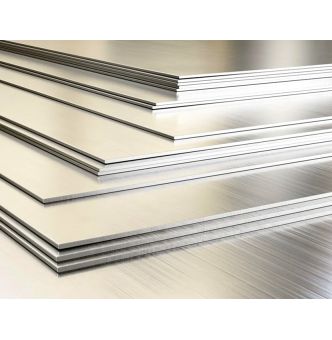
5052 mill finish aluminum is a non-heat-treatable aluminum-magnesium alloy valued for its strength, corrosion resistance, formability and weldability. Containing approximately 2.2–2.8% magnesium, it is widely used for marine-related components, fuel tanks, transportation panels, industrial enclosures and fabricated sheet-metal parts.
Henan Worthwill Industry Co., Ltd. supplies 5052 aluminum sheet, plate and coil in O, H32, H34 and other specified tempers. The published product range covers 0.15–500 mm thickness, 20–2200 mm width and 500–11000 mm sheet or plate length across different supply forms. Actual availability depends on the selected temper, dimensions and production route; the full thickness range does not apply to coil.
Available processing options include slitting, cut-to-length, leveling, edge trimming and protective film where required. For an accurate quotation, send your 5052 alloy and temper, thickness, width, sheet length or coil specifications, order quantity, application and delivery destination.
5052 aluminum is a widely used 5xxx-series aluminum-magnesium alloy that offers a practical combination of strength, corrosion resistance and formability. It is particularly useful for fabricated components exposed to moisture, outdoor conditions or salt-laden environments.
Unlike heat-treatable alloys such as 6061, 5052 gains strength mainly through cold working. Its mechanical properties depend on the specified temper, making the difference between 5052-O, 5052-H32 and 5052-H34 important when selecting material for bending, stamping, welding or industrial fabrication.
Worthwill supplies 5052 mill finish aluminum sheet, plate and coil for manufacturers, fabricators and industrial buyers. The natural rolled surface is suitable for many industrial applications and can also be processed further when an anodized, painted or decorative finish is required.
5052 is a wrought aluminum alloy containing approximately 2.2–2.8% magnesium and 0.15–0.35% chromium. These alloying elements help provide higher strength than commonly used 1xxx and 3xxx aluminum grades in comparable conditions, together with good resistance to corrosion.
The alloy is non-heat-treatable. Its strength is controlled primarily through strain hardening and temper processing rather than precipitation-hardening heat treatment.
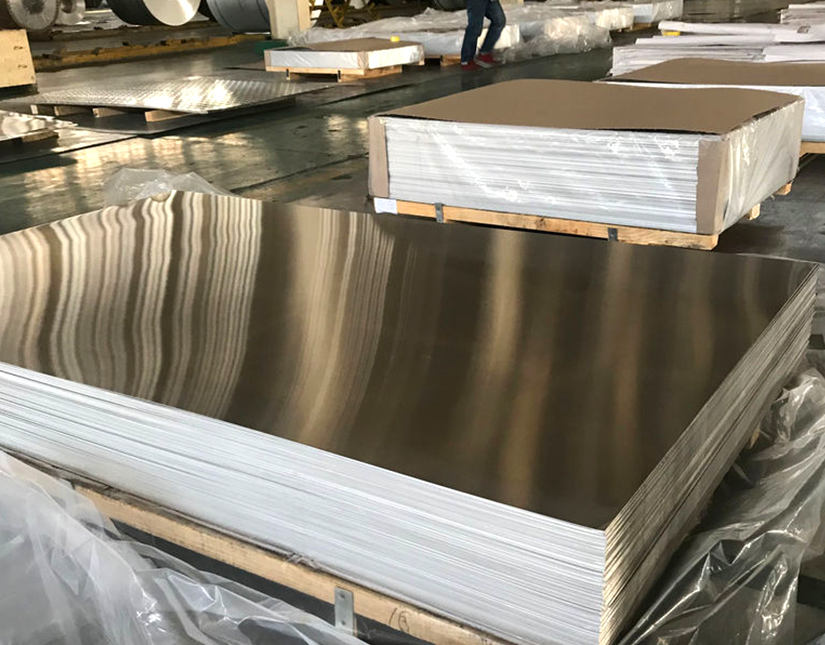
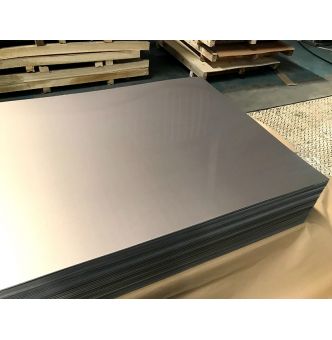
Mill finish describes the natural surface produced by rolling. It has not been given a decorative brushed, polished, anodized or paint-coated finish. Normal rolling lines and minor surface variations may be visible, depending on the production process and agreed surface requirements.
5052 aluminum is available in different product forms. Sheet is commonly selected for fabricated panels and formed parts, coil for continuous processing, and plate for thicker components. Buyers should select the appropriate form before specifying dimensions and tolerances.
| Product Form | Characteristics | Common Applications |
|---|---|---|
| 5052 Aluminum Sheet | Flat rolled material supplied in standard or custom-cut dimensions | Enclosures, equipment covers, vehicle panels, tanks and formed components |
| 5052 Aluminum Coil | Continuous rolled material available in suitable gauges and widths | Roll forming, stamping, slitting and continuous sheet-metal production |
| 5052 Aluminum Plate | Thicker flat material for fabricated or machined components | Equipment components, support plates, fixtures and industrial fabrication |
Worthwill's published catalog covers an overall thickness range of 0.15–500 mm across different supply forms. This is not a continuous production range for every temper or product form. Very thick material belongs to the plate category, while coil is limited to suitable rolling gauges.
For coil orders, specify thickness, width, coil inner diameter, target coil weight and edge requirements. For sheet and plate, provide thickness, width, length, flatness and any cutting or surface-protection requirements.
Temper selection affects yield strength, tensile strength, hardness and formability. Two sheets with the same 5052 alloy designation can behave differently during bending or stamping if they have different tempers.
| Temper | Main Characteristics | Selection Guidance |
|---|---|---|
| 5052-O | Annealed condition with high ductility and relatively low strength | Deep drawing, complex forming and parts requiring substantial deformation |
| 5052-H32 | Strain-hardened and stabilized quarter-hard condition | General sheet-metal fabrication, enclosures, marine-related panels and tanks |
| 5052-H34 | Strain-hardened and stabilized half-hard condition with higher strength than H32 | Equipment panels and fabricated parts requiring greater resistance to permanent deformation |
| 5052-H36 / H38 | Higher strain-hardened strength with reduced formability | Parts requiring greater strength with limited forming; availability depends on product dimensions |
5052-H32 aluminum sheet is a common starting choice for fabricated components that need both strength and workable bending performance. It is widely specified for industrial enclosures, transportation panels, marine-related equipment and welded sheet-metal assemblies.
5052-H34 aluminum sheet offers higher strength than H32 but generally requires more attention to bend radius, springback and forming direction. It is useful when the finished component needs greater resistance to permanent deformation and does not require extensive deep forming.
O temper should be evaluated when the part requires more demanding deformation. H36 and H38 offer higher strength but lower forming capability. Other tempers may be considered according to the applicable standard, product form and production availability.
For repeat manufacturing, confirm the required temper on the drawing and purchase order. A forming trial is recommended when changing from one temper to another.
The principal alloying element in 5052 aluminum is magnesium, with a smaller chromium addition. The following composition provides reference limits for AA 5052 by mass percentage.
| Element | Composition (wt. %) |
|---|---|
| Magnesium (Mg) | 2.2–2.8 |
| Chromium (Cr) | 0.15–0.35 |
| Silicon (Si) | 0.25 max. |
| Iron (Fe) | 0.40 max. |
| Copper (Cu) | 0.10 max. |
| Manganese (Mn) | 0.10 max. |
| Zinc (Zn) | 0.10 max. |
| Aluminum (Al) | Remainder |
The ordered alloy designation and applicable standard govern final chemical acceptance. Buyers requiring certified material should specify the relevant chemical-composition standard and mill test certificate before production.
Mechanical properties depend on temper, material thickness and the applicable standard. The following are approximate typical reference values at room temperature, not guaranteed minimum properties for every size or production batch.
| Temper | Tensile Strength | Yield Strength | Typical Hardness |
|---|---|---|---|
| 5052-O | About 195 MPa | About 90 MPa | 47 HB |
| 5052-H32 | About 230 MPa | About 195 MPa | 60 HB |
| 5052-H34 | About 260 MPa | About 215 MPa | 68 HB |
These typical values are useful for preliminary comparison. Certified mechanical-property requirements, including tensile strength, yield strength and elongation, should follow the ordered standard and thickness range. Material certificates and any required testing should be agreed before shipment.
5052 aluminum has a typical density of approximately 2.68 g/cm³. Its elastic modulus is broadly similar to that of other common aluminum alloys, so a higher-strength temper does not automatically make a panel more resistant to elastic deflection. Thickness, geometry and support conditions also affect stiffness.
Good corrosion resistance: 5052 performs well in many atmospheric, industrial and salt-exposed environments. This makes it a practical candidate for coastal equipment, marine-related fittings and outdoor fabricated components.
Higher strength than general-purpose aluminum: In commonly compared tempers, 5052 offers higher strength than 1100 or 3003 aluminum. This can be useful for equipment covers, brackets and fabricated panels where resistance to permanent deformation matters.
Good forming performance: 5052 can be bent, stamped and roll formed using suitable tooling. O and H32 tempers are often considered when the component requires significant forming, while harder tempers require greater attention to bend radius.
Good weldability: 5052 can be welded using appropriate aluminum welding procedures. For strain-hardened material, welding may reduce strength in the heat-affected zone, which must be considered in the design of load-carrying assemblies.
Useful fatigue resistance: The alloy has favorable fatigue characteristics for many fabricated components subjected to repeated loading. Actual fatigue performance depends on stress level, joint details, surface condition and component design.
Lightweight fabrication: With a density of approximately 2.68 g/cm³, 5052 provides useful strength at a relatively low material weight. It is suitable for transportation equipment and industrial assemblies where weight reduction is important.
Although 5052 is frequently described as marine-grade aluminum, this does not mean it is automatically suitable for every seawater or marine structural application. More demanding marine structures may require alloys such as 5083 or 5086 and project-specific engineering approval.
Marine-related equipment: Boat fittings, access panels, equipment housings, covers, storage compartments and other fabricated components exposed to moisture or salt-laden air.
Fuel tanks and fabricated containers: Tanks, reservoirs and enclosures where formability, weldability and corrosion resistance are required. The design must account for the stored fluid, operating conditions, weld quality and applicable safety requirements.
Transportation and automotive components: Vehicle panels, trailer components, truck body parts, equipment covers and fabricated brackets where useful strength and low weight are important.
Industrial equipment and enclosures: Electrical cabinets, machinery guards, instrument housings, protective covers and fabricated panels requiring stronger material than general-purpose 1xxx or 3xxx aluminum.
Architectural and outdoor fabrication: Formed panels, decorative screens, covers and coastal building components when the selected alloy, temper, surface treatment and installation details suit the exposure conditions.
Stamped and roll-formed components: 5052 aluminum coil can be processed into repeat-production parts through suitable slitting, stamping, bending and roll-forming operations.
For perforated panels and fabricated screens, Worthwill also supplies perforated aluminum sheet and plate. The final design should consider hole pattern, remaining metal, bending requirements and service conditions.
5052 is commonly selected for sheet-metal parts because it combines good forming capability with higher strength than commercially pure aluminum. However, forming performance changes significantly with temper and thickness.
For tight bends, the inside bend radius, rolling direction, cut-edge quality and tooling should be checked. Harder tempers generally have lower ductility and may need a larger bend radius than O temper or H32 material.
When welding 5052 aluminum, use a suitable qualified welding procedure and compatible filler material. The strength of the welded area may be lower than the strength of the unwelded strain-hardened sheet. For tanks and load-carrying components, joint design and inspection requirements are particularly important.
Mill finish 5052 can also be anodized, painted, brushed or otherwise surface treated after appropriate preparation. The final appearance of anodized material depends on alloy composition, surface condition and process control. Decorative requirements should be confirmed through a reference sample.
A mill finish is the natural rolled surface of aluminum without a decorative coating. It may have visible rolling lines, slight tone variations or minor handling marks that do not affect normal industrial fabrication.
For exposed architectural panels, visible equipment covers or decorative components, the surface requirements should be defined before production. Specify whether one or both sides are appearance surfaces, the acceptable finish standard and any protective-film requirements.
Protective film, paper interleaving, suitable separators and moisture-resistant packaging can be discussed according to the product form. Before painting, bonding or printing, the surface normally requires cleaning and pretreatment compatible with the intended process.
5052 is not always the best alloy for every application. The material should be selected according to the required strength, forming method, corrosion exposure, joining process and total fabrication cost.
| Alloy | Main Advantage | Typical Selection |
|---|---|---|
| 3003 Aluminum | Good formability and corrosion resistance with moderate strength | General sheet-metal work, HVAC parts, cookware components and lightly loaded panels |
| 5052 Aluminum | Higher strength than 3003 in commonly compared tempers, with good corrosion resistance and weldability | Marine-related parts, transportation panels, tanks and demanding fabricated enclosures |
| 6061 Aluminum | Heat-treatable alloy offering higher strength in T6 temper and good machinability | Machined components, frames and engineered parts requiring the properties of the specified 6061 temper |
For general fabrication and easier forming, 3003 may be the more economical choice. For better performance in salt-exposed environments or higher strength in formed components, 5052 is often worth evaluating. For machined parts or applications specifically requiring 6061-T6 properties, 6061 may be more suitable.
Read our detailed guide, 3003 vs 5052 Aluminum Sheet: Which Alloy Should You Choose?, for a closer comparison of mechanical properties, bending performance, corrosion resistance and application selection.
Worthwill supplies 5052 aluminum according to the agreed alloy, temper, dimensions, surface condition and inspection requirements. For international projects, buyers may specify standards such as ASTM B209/B209M or the applicable EN 573 and EN 485 standards, subject to confirmation for the ordered product.
Inspection requirements can include chemical composition, tensile properties, dimensional tolerances, flatness, surface condition, edge quality and coil parameters. Material test certificates or third-party inspection should be requested before production when required by the project.
Export packaging is selected according to the material form and shipment requirements. Aluminum sheets and plates may be packed with protective wrapping, separators, edge protection and reinforced pallets or wooden cases. Aluminum coils may require moisture-resistant wrapping, edge protection and secure strapping to minimize movement and damage during transportation.
The price of 5052 aluminum sheet, plate or coil depends on the aluminum market price, alloy, temper, thickness, width, quantity, processing requirements and delivery terms. There is no single fixed FOB price suitable for every order.
For standard bulk orders, Worthwill's general minimum order quantity is approximately 3 metric tons, subject to product specifications and supply availability. Special dimensions or processing may affect the final minimum quantity.
For an accurate quotation, provide the required product form, 5052 alloy and temper, thickness, width, sheet or plate length, coil specifications where applicable, order quantity, surface requirements, destination port and any inspection or certification requirements.
For additional alloy options, see Worthwill's mill finish aluminum sheet and coil range.
Is 5052 aluminum suitable for marine applications? Yes. 5052 offers good corrosion resistance and is commonly used for marine-related fittings, equipment covers and fabricated components. However, applications involving permanent seawater immersion, critical structures or demanding marine service require project-specific material selection.
What is the difference between 5052-H32 and 5052-H34? H32 is a quarter-hard temper that balances strength and formability. H34 is a half-hard temper with higher strength and reduced ductility. The correct choice depends on bending requirements, thickness and finished-part performance.
Can 5052-H32 aluminum sheet be bent? Yes. 5052-H32 is widely used for bent and formed sheet-metal components. The minimum bend radius depends on sheet thickness, rolling direction, tooling and the applicable material specification.
Can 5052 aluminum be welded? Yes. 5052 has good weldability when a suitable welding procedure and filler material are used. The heat-affected zone may lose some strain-hardened strength, so welded assemblies must be designed accordingly.
Is 5052 stronger than 3003 aluminum? In commonly compared sheet tempers, 5052 generally has higher tensile and yield strength than 3003. However, the correct comparison must use the actual alloy temper and thickness rather than alloy names alone.
Can Worthwill supply custom-size 5052 aluminum coil and sheet? Yes. Sheet cutting, coil slitting, leveling and other processing options can be discussed according to the requested dimensions, temper, tolerance and order quantity. Not every thickness or width is available in every form.
What information is needed for a 5052 aluminum quotation? Please send the alloy, temper, product form, thickness, width, length or coil requirements, quantity, application, surface expectations, destination and any material certificate or inspection requirements.
Henan Worthwill Industry Co., Ltd. supplies 5052 mill finish aluminum sheet, plate and coil for industrial fabrication and export projects. Send your technical specification or drawing, and our team will review the appropriate temper, available dimensions, processing requirements, packaging and delivery terms before quotation.
| Item | Specification |
|---|---|
| Product Name | 5052 Mill Finish Aluminum Sheet, Plate & Coil |
| Alloy | AA 5052 / EN AW-5052 / UNS A95052, subject to the ordered standard |
| Product Forms | Sheet, plate, coil, slit coil and cut-to-length sheet |
| Main Tempers | O, H32, H34, H36, H38; other tempers subject to specification and availability |
| Published Thickness Range | 0.15–500 mm across different product forms; not applicable to every temper or to coil throughout |
| Published Width Range | 20–2200 mm; availability depends on thickness, product form and processing |
| Sheet / Plate Length | 500–11000 mm, subject to thickness and production route |
| Coil Specifications | Continuous coil (C); confirm inner diameter, outer diameter, coil weight and edge requirements |
| Surface Finish | Natural mill finish, uncoated and non-anodized |
| Processing Options | Slitting, cut-to-length, leveling, edge trimming and protective film where applicable |
| Main Alloying Elements | Mg 2.2–2.8%; Cr 0.15–0.35% |
| Typical Density | Approximately 2.68 g/cm³ |
| Relevant Standards | ASTM B209/B209M; EN 573 and EN 485, as applicable to the agreed order |
| Typical Applications | Marine-related components, fuel tanks, transportation panels, industrial enclosures and fabricated sheet-metal parts |
| Typical MOQ | Approximately 3 metric tons, subject to specifications and supply availability |
| Packaging | Moisture-resistant export packaging, protective wrapping, edge protection, pallets or wooden cases according to product form |
| Quotation Requirements | Alloy, temper, product form, dimensions, quantity, application, destination and inspection requirements |
Specification note: Published dimensions represent Worthwill's combined product catalog range. Actual availability must be confirmed for each alloy-temper-form-size combination. Final tolerances, mechanical-property requirements and material certification are subject to the agreed purchase specification.

Send us your product, alloy, size, quantity and application requirements for a detailed quotation.