Related Products



Position: Home > Products > Aluminum Foil


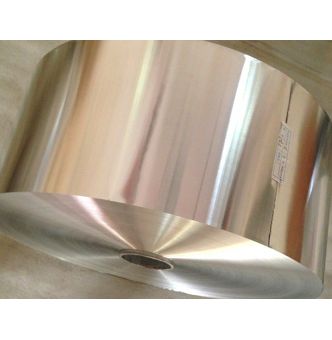
Worthwill supplies aluminum foil for food containers as jumbo roll raw material for stamping and forming aluminum food trays, takeaway containers, airline meal trays, baking pans and other formed food packaging.
Common container foil alloys include 3003, 8011 and 8006, with H22 and H24 among the typical tempers used for container production. Thickness, width, temper, coil ID and mechanical requirements can be matched to the customer’s forming process.
Container aluminum foil can be supplied in plain or pre-lubricated condition according to the production line. Stable gauge, clean surface, controlled winding and suitable forming performance help reduce tearing, wrinkling and production interruptions during high-volume stamping.
Material certificates and applicable food-contact, inspection or compliance documentation can be supplied according to the agreed product specification and destination-market requirements. Please provide the container type, alloy, temper, thickness, width and lubrication requirement when requesting a quotation.
Aluminum foil for food containers is a specialized aluminum foil stock used as raw material for stamping and forming semi-rigid food containers, trays, dishes and baking pans. Unlike household foil that is mainly designed for wrapping, food container foil must provide a controlled combination of strength, elongation, thickness consistency and forming performance.
Worthwill supplies food container aluminum foil in commonly used alloys including 3003, 8011 and 8006. The foil can be produced in different tempers, gauges, widths and coil configurations to match container presses, tooling and downstream production requirements.
Typical applications include takeaway meal containers, ready-meal trays, airline catering trays, bakery pans, pie plates, roasting trays, frozen-food containers and other formed aluminum food packaging.
There is no single aluminum alloy that is automatically the best choice for every foil container. Container depth, wall design, rim geometry, target rigidity, forming speed and foil thickness all affect material selection. For most projects, 3003, 8011 and 8006 are the main alloys considered.
3003 aluminum foil is widely used for formed food containers because it offers a useful combination of strength, ductility and corrosion resistance. It is particularly suitable where the finished tray requires greater rigidity or where the forming operation involves deeper or more demanding shapes.
3003 H24 aluminum foil is a common specification for takeaway containers, catering trays, baking pans and other semi-rigid aluminum packaging. The final temper and thickness should still be selected according to the mold design and required mechanical properties.
8011 aluminum foil is one of the most widely used aluminum foil grades in packaging applications. For food container manufacturing, it offers good formability and practical mechanical performance while remaining suitable for efficient large-volume converting.
Common specifications include 8011 H22 and 8011 H24 aluminum foil. It is frequently used for disposable food trays, lunch boxes, bakery containers, foodservice packaging and other pressed foil products.
8006 aluminum foil is another established container foil alloy, particularly for projects where higher rigidity, controlled forming behavior or demanding container geometries are required. It is used in selected food tray and container applications in international markets.
Because mechanical performance changes with alloy, temper and thickness, 8006 should be evaluated against the actual press, mold and finished-container requirements rather than selected by alloy number alone.
| Alloy | Typical Characteristics | Typical Container Applications |
| 3003 | Good strength, formability and rigidity; widely used for semi-rigid formed packaging | Takeaway trays, catering containers, baking pans, deeper formed containers |
| 8011 | Balanced formability and processing performance; widely available for packaging conversion | Food trays, lunch boxes, bakery containers and general foodservice packaging |
| 8006 | Selected where additional rigidity or specific forming performance is required | Rigid or semi-rigid trays and specialized food container applications |
This comparison is a practical starting point rather than a universal specification. Two containers made from the same alloy may still require different foil thicknesses or tempers because their depth, wall profile, rim design and forming tools are different.
Temper is one of the most important factors in food container foil. The material must be strong enough to retain the finished container shape while still providing enough ductility for stamping and drawing.
H22 aluminum foil provides a partially strain-hardened condition with useful formability and is selected for applications where the forming operation requires more flexibility.
H24 aluminum foil provides a higher level of strain hardening and is widely specified where a balance between forming performance and finished-container rigidity is required.
Other tempers such as H18 or O may be available for particular specifications, but the correct temper should be confirmed using the finished product design and forming process.
Container aluminum foil is generally much thicker than ordinary household wrapping foil because the material must maintain a three-dimensional shape after stamping. A typical supply range is approximately 0.03–0.20 mm, or 30–200 microns, depending on the container design and application.
Many disposable food trays use gauges within the lower or middle part of this range, while deeper, larger or higher-load containers may require thicker material. The correct gauge should therefore be determined by container dimensions, material alloy, temper, embossing or wall design and required stacking strength.
Food container foil can be supplied in either lubricated or non-lubricated condition depending on the customer's forming process.
Pre-lubricated aluminum foil is supplied with a controlled lubricant layer intended to reduce friction between the foil and forming tools. For suitable production lines, consistent lubrication can support smoother feeding and stamping while helping reduce scratching, aluminum pickup and forming defects.
Non-lubricated foil is suitable for converters that apply their own lubricant or operate a process requiring untreated foil. Surface requirements should be agreed before production because cleanliness and surface condition can directly affect downstream processing.
If lubrication is required, please specify the lubricant type or applicable food-contact requirement and the target coating quantity where these parameters are controlled by your production process.
Aluminum container foil stock can be converted into many types of food packaging. Common applications include:
Takeaway and Food Delivery Containers: Rectangular, round and compartment trays used by restaurants, catering companies and foodservice distributors.
Ready-Meal Trays: Formed trays for prepared foods and packaged meal systems requiring stable shape and effective barrier performance.
Airline and Catering Meal Trays: Lightweight formed containers designed for portioned meals and high-volume catering operations.
Bakery and Ovenware: Pie plates, cake pans, baking trays, roasting pans and other disposable or semi-rigid aluminum bakeware.
Frozen and Chilled Food Packaging: Aluminum trays used for food storage and distribution where moisture, light and gas barrier properties are important.
Aluminum foil combines low weight with excellent formability and a complete barrier to light. When appropriately specified and converted, it can also provide an effective barrier against moisture, gases and grease while transferring heat efficiently during food preparation.
The material can be stamped into a wide range of container shapes and is recyclable through established aluminum recycling streams where suitable collection and recycling infrastructure is available.
For manufacturers, however, the most important advantage is process compatibility. Stable foil gauge, suitable elongation, consistent temper, controlled coil winding and clean surfaces help maintain repeatable performance during high-volume forming.
A food container foil specification should cover more than alloy and thickness. Depending on the application, Worthwill can confirm or inspect the following characteristics against the agreed order requirements:
Thickness and Gauge Consistency: Consistent foil thickness helps maintain stable forming behavior and finished-container weight.
Width and Slitting Accuracy: Finished coil width should match the feeder and tooling configuration of the container production line.
Mechanical Properties: Tensile strength and elongation can be confirmed according to the required alloy, temper and applicable specification.
Surface Condition: The foil should be clean and suitable for the intended forming, lubrication, coating or other downstream operation.
Edge Quality: Controlled slit edges help reduce feeding problems and the risk of tearing during conversion.
Coil Winding: Stable winding and suitable coil geometry support consistent unwinding on automated production equipment.
Food-contact requirements vary by destination market, alloy, surface treatment and final application. For this reason, compliance should be confirmed against the exact product specification rather than assumed from the description "food grade aluminum foil" alone.
Where applicable, Worthwill can provide material certificates, COA/MTC and agreed inspection or food-contact documentation according to the order requirements. Requirements involving ASTM, EU food-contact regulations, FDA-related documentation or other customer standards should be stated before production.
ASTM B479 covers selected annealed aluminum and aluminum-alloy foils used for flexible barrier and food-contact applications. Other requirements may apply to semi-rigid container stock or finished food packaging according to the alloy, temper and destination market.
For a more accurate quotation and material recommendation, please provide the following information:
1. Final application: takeaway tray, airline tray, baking pan, ready-meal container or another formed product.
2. Alloy: 3003, 8011, 8006 or your specified grade.
3. Temper: H22, H24 or another required temper.
4. Thickness: state the nominal gauge and tolerance if controlled by your process.
5. Width: finished coil width or slit width required by the press.
6. Coil ID and coil weight: confirm the dimensions compatible with your feeding equipment.
7. Lubrication: lubricated or non-lubricated, including any specific lubricant or coating-weight requirement.
8. Mechanical or surface requirements: tensile strength, elongation, surface condition, edge quality or other controlled parameters.
9. Food-contact or inspection documentation: state the destination market and required standard or test document.
Aluminum foil coils are sensitive to moisture, edge damage and deformation during transportation. Export packing should therefore protect both the foil surface and coil geometry throughout handling and sea shipment.
Packing configuration can be prepared according to coil dimensions, weight and shipment method, with moisture protection, edge protection, suitable supports and external identification according to the agreed order requirements.
Worthwill supplies aluminum foil and other rolled aluminum products to international industrial buyers. For food container manufacturers, our focus is not simply supplying an alloy number but matching the material specification to the actual forming process.
Customers can specify alloy, temper, gauge, width, coil ID, coil weight, surface condition, lubrication and inspection requirements before production. This makes it easier to align the aluminum foil jumbo roll with existing presses, molds and production targets.
If you are currently using 3003 H24, 8011 H22/H24 or 8006 container foil, send us your existing specification or a sample requirement. If the material has not yet been finalized, provide the container dimensions, forming process and target application so that the appropriate specification can be discussed before quotation.
3003, 8011 and 8006 are among the commonly used alloys for aluminum food container production. The best choice depends on the container shape, required rigidity, drawing depth, foil thickness and forming process.
A common supply range is approximately 0.03–0.20 mm, or 30–200 microns. The required thickness depends on container size, design, alloy, temper and required mechanical strength.
Neither alloy is automatically better for every container. 3003 is often selected where greater strength and rigidity are useful, while 8011 provides good forming and general packaging performance. Actual selection should also consider temper, thickness, mold geometry and press conditions.
Yes. 3003 H24 and 8011 H24 are common container foil specifications. H22 and other suitable tempers can also be discussed according to the required forming performance.
Yes. Container aluminum foil can be supplied in lubricated or non-lubricated condition according to the downstream forming process. Any specific lubricant, application amount or food-contact requirement should be confirmed before production.
Please provide the final application, alloy, temper, thickness, width, coil ID, quantity and lubrication requirement. If available, also provide the container drawing, existing material specification, mechanical-property requirements and destination-market compliance requirements.
| Product | Aluminum Foil for Food Containers / Container Foil Stock |
| Common Alloys | 3003, 8011, 8006 |
| Typical Temper | H22, H24; H18 / O or other suitable tempers subject to application and production confirmation |
| Thickness | 0.03–0.20 mm (30–200 μm), customized according to container design and forming requirements |
| Width | Typically 80–1250 mm; slit width can be customized according to production-line requirements |
| Coil ID | 76 mm / 152 mm or customized where available |
| Surface | Plain / mill finish; surface appearance according to gauge and rolling process |
| Lubrication | Lubricated / non-lubricated according to forming process |
| Processing | Slitting, rewinding and customized coil dimensions |
| Typical Applications | Takeaway containers, food trays, airline meal trays, ready-meal containers, catering trays, bakery pans, pie plates and other formed aluminum food packaging |
| Quality Requirements | Thickness, width, mechanical properties, surface condition, slit edge and coil winding according to agreed specification |
| Documentation | COA/MTC and applicable inspection or food-contact documentation available according to order and destination-market requirements |
| Customization | Alloy, temper, thickness, width, coil ID, coil weight, lubrication, packing and inspection requirements |

Send us your product, alloy, size, quantity and application requirements for a detailed quotation.