Related Products
nodata



Position: Home > Products > Aluminum Foil
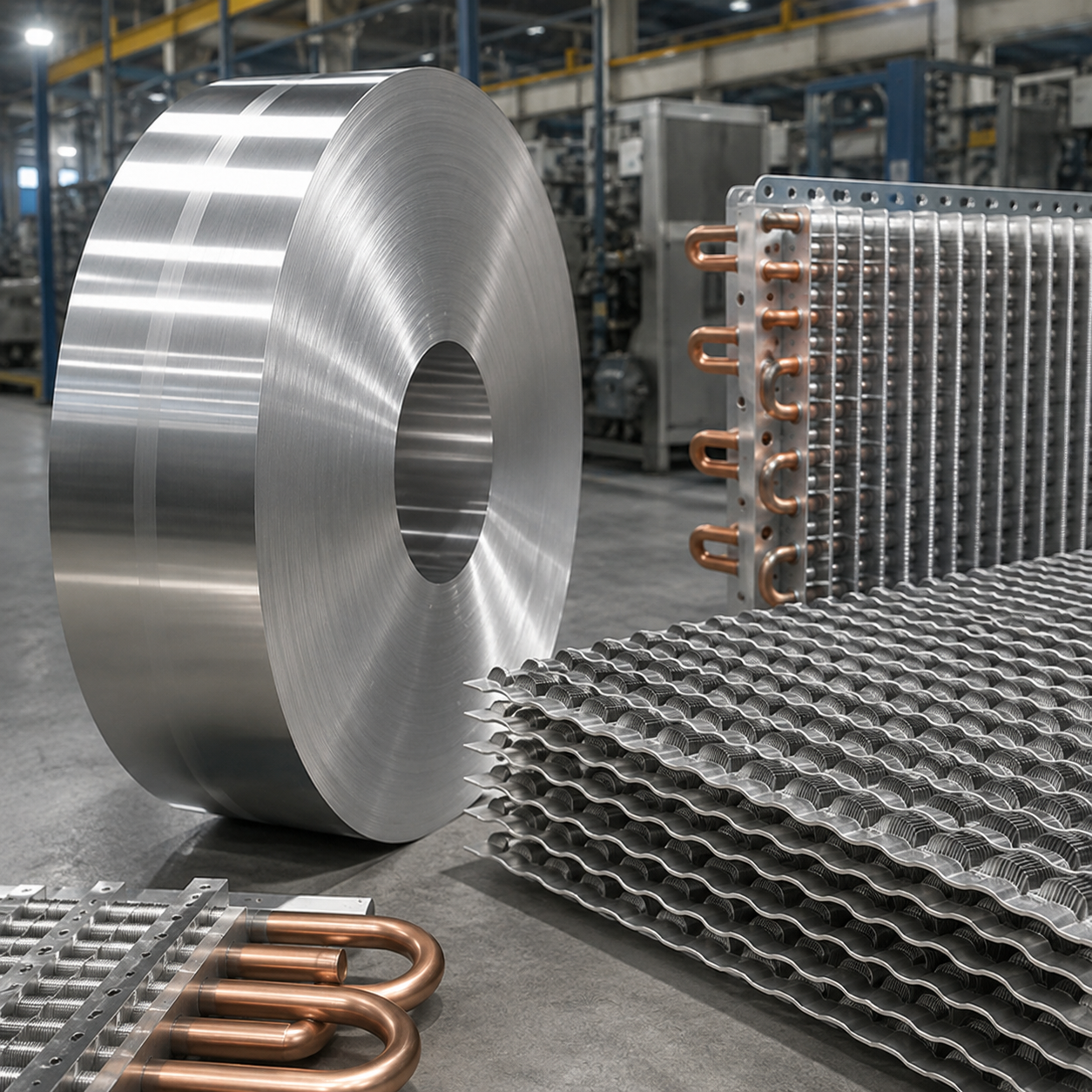
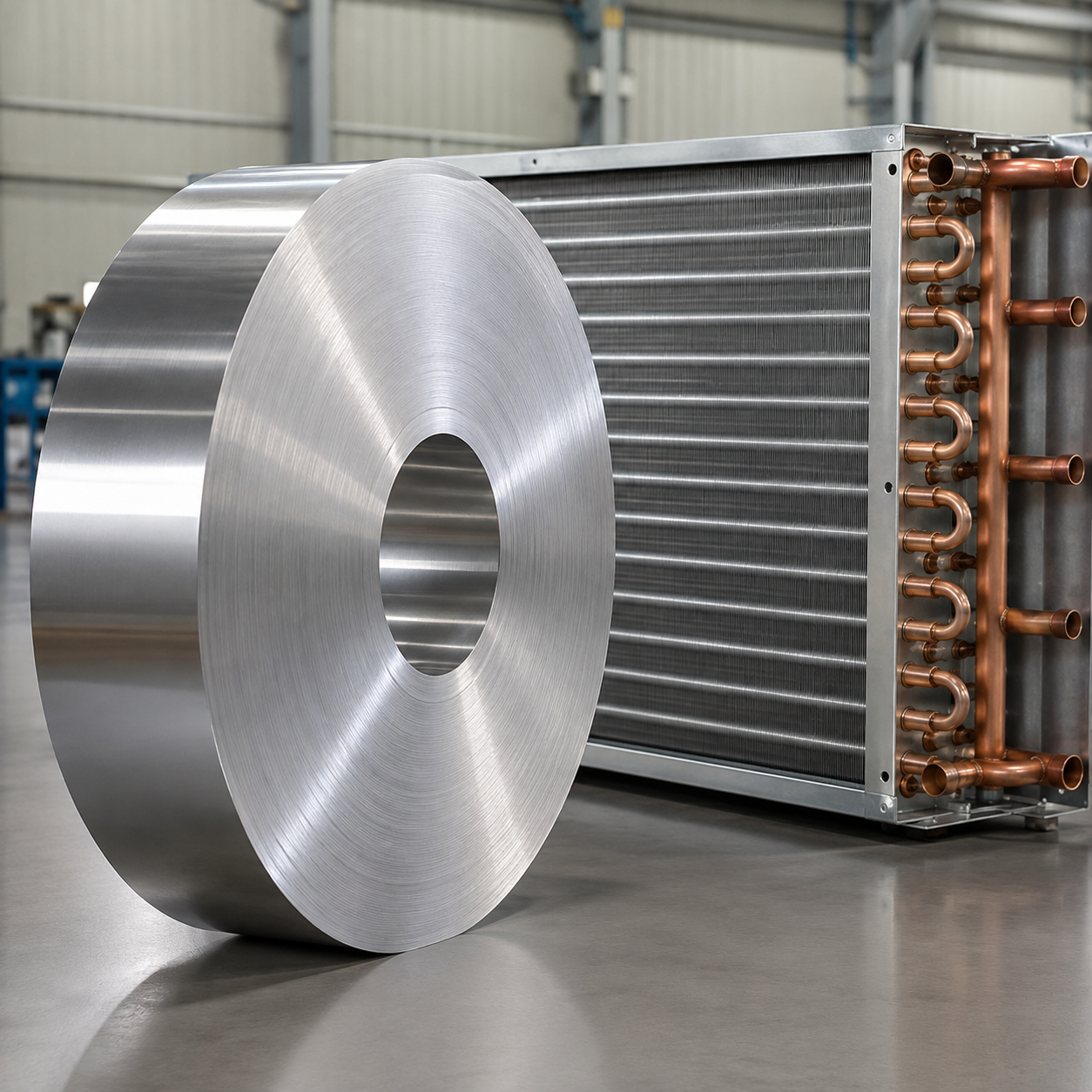
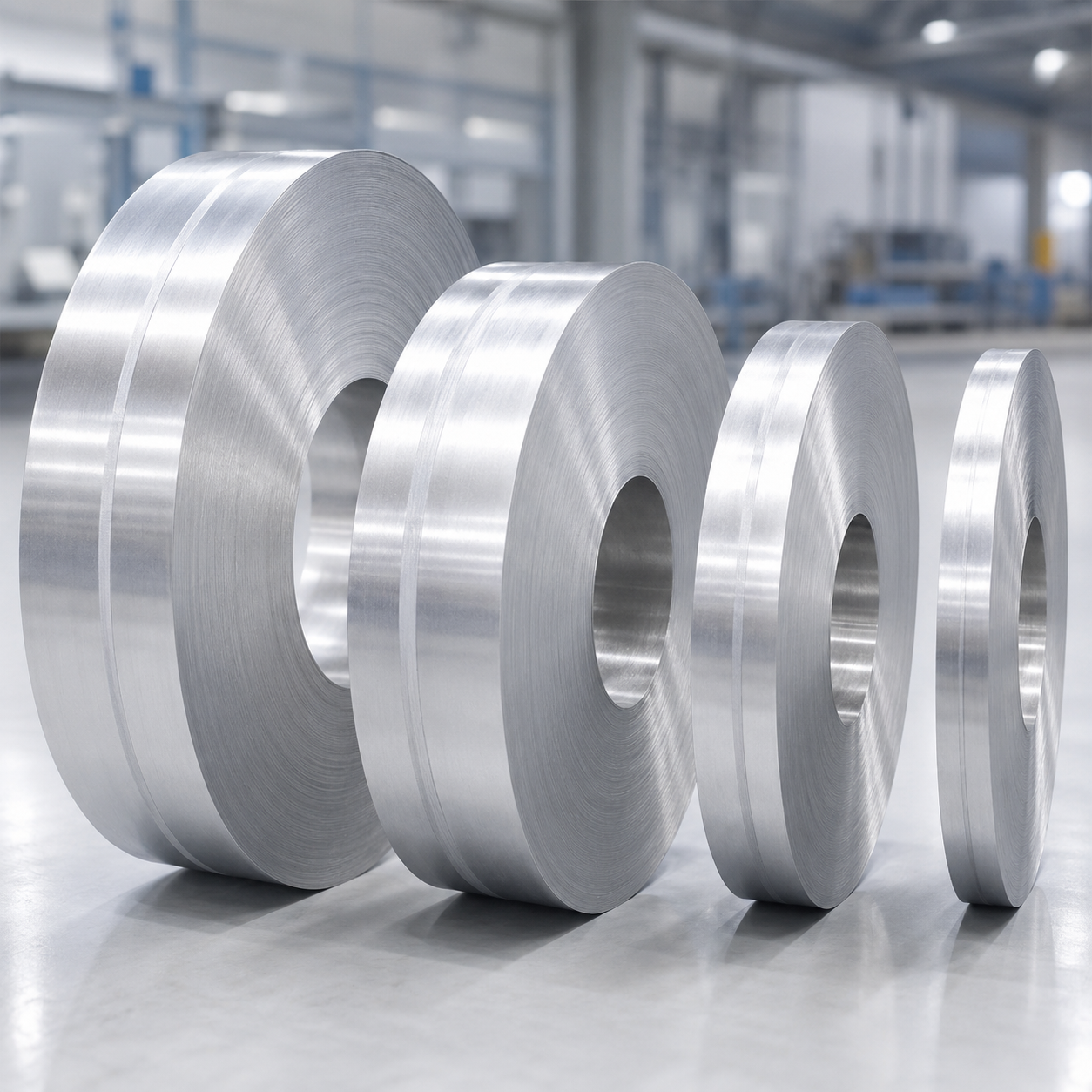
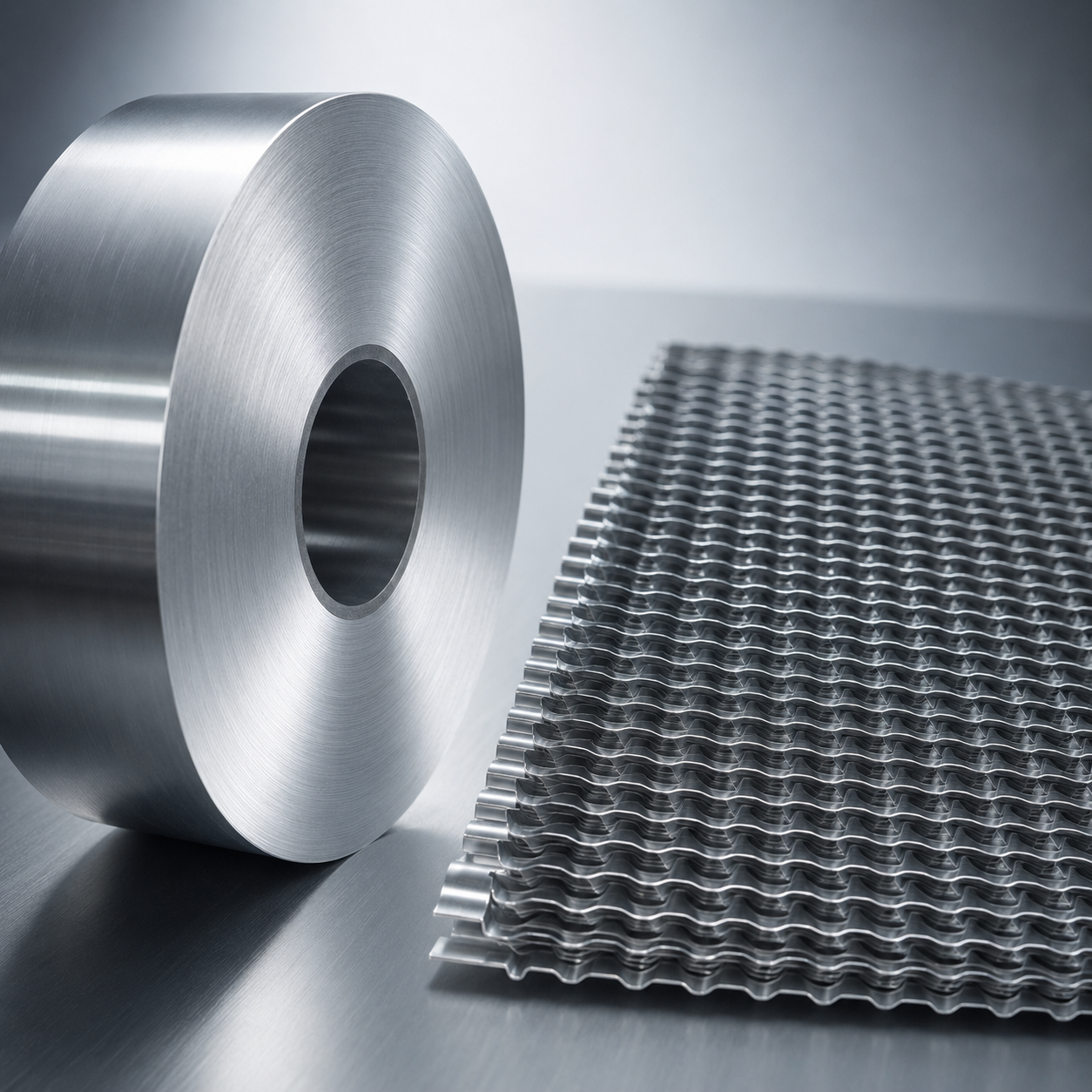
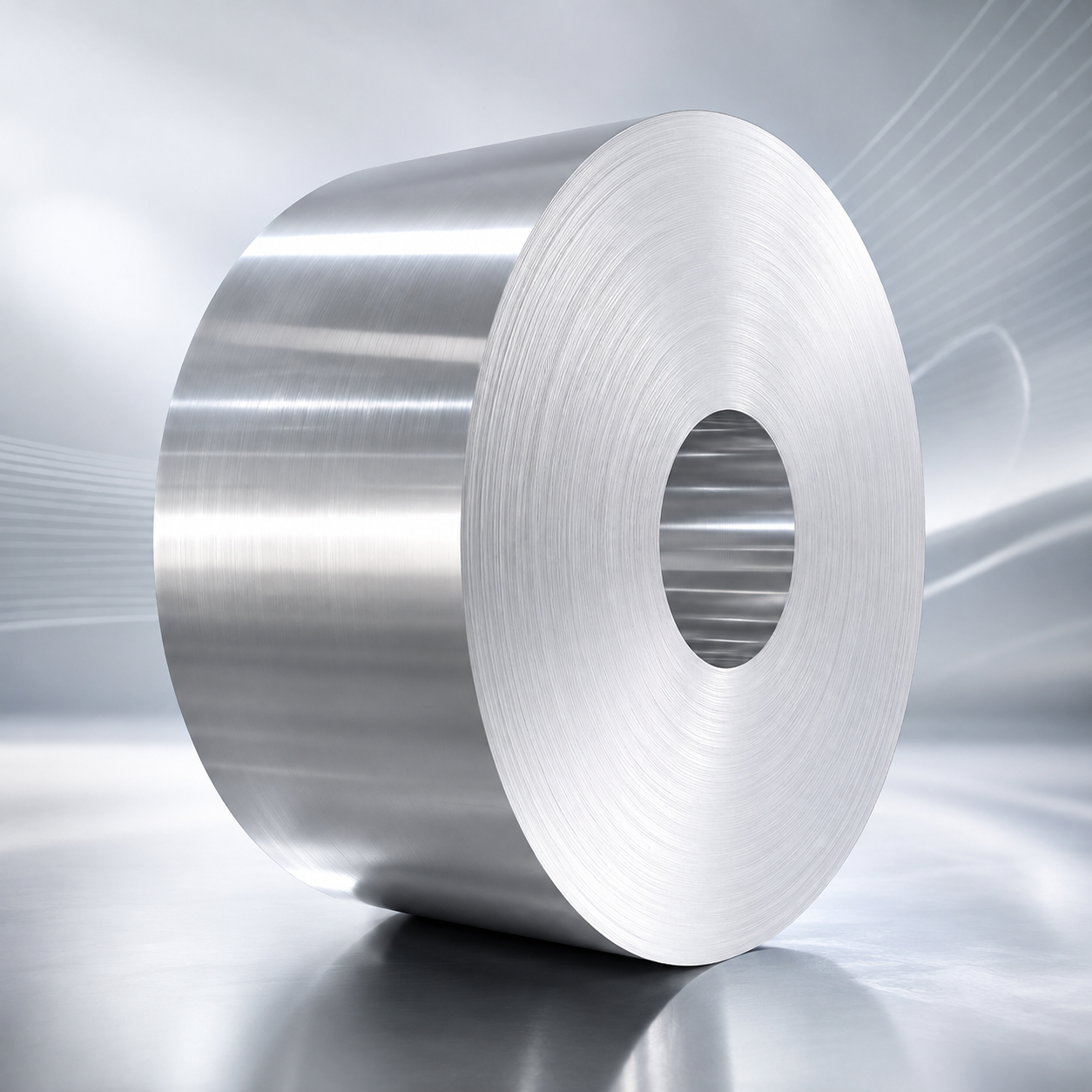
Aluminum fin stock and heat exchanger foil for HVAC, refrigeration, condenser and evaporator fin production.
Common alloys include 1100, 3003, 3102 and 8011 with O, H22, H24 and H26 temper options.
Bare, degreased and coated surface options can be supplied according to fin forming and service requirements.
Thickness, width, coil ID, OD and mechanical properties can be customized for different fin presses and production lines.
Aluminum fin stock is thin-gauge aluminum foil or coil engineered for forming the fins used in heat exchangers. These fins increase the effective surface area available for heat transfer and are widely used in air conditioners, condensers, evaporators, refrigerators, commercial refrigeration systems and other thermal management equipment.
Henan Worthwill Industry Co., Ltd. supplies aluminum fin stock and heat exchanger foil in common alloys including 1100, 3003, 3102 and 8011, with different temper, thickness, width and surface options according to the customer's fin design and forming process.
The material can be supplied as bare aluminum fin stock, degreased foil or coated fin stock. For applications requiring improved condensate drainage or surface protection, hydrophilic, hydrophobic and other functional coating options can also be discussed according to the operating environment.
Aluminum fin stock, also called aluminum fin stock foil, heat exchanger foil or HVAC aluminum foil, is the aluminum material formed into thin fins inside a heat exchanger. The finished fins are normally stamped, corrugated, louvered or otherwise formed to create a large heat-transfer surface while maintaining controlled airflow through the heat exchanger.
Compared with general-purpose aluminum foil, fin stock is selected not only by alloy and thickness but also by mechanical properties, forming behavior, surface cleanliness, flatness and consistency. These characteristics can directly affect fin stamping, collar forming, louver formation, press stability and the final geometry of the heat exchanger fins.
For this reason, specifying heat exchanger aluminum foil usually requires more information than simply giving an alloy number. The fin design, press type, forming depth, operating environment and required surface treatment should also be considered before production.
Bare aluminum fin stock: Uncoated aluminum foil used where standard forming performance, thermal conductivity and cost efficiency are the main requirements. Surface cleanliness and controlled residual oil are important for stable fin forming and downstream processing.
Degreased aluminum fin stock: Surface-treated base foil with reduced rolling-oil residue. It can be selected when the customer's forming process or subsequent coating operation requires tighter surface cleanliness.
Hydrophilic coated fin stock: A functional surface is applied to improve the wetting and drainage behavior of condensate. This type is widely associated with air-conditioning and refrigeration heat exchangers operating under humid conditions.
Hydrophobic or protective coated fin stock: Special coating systems can be considered when water repellency, corrosion protection or another defined surface function is required.
If your project specifically requires hydrophilic coated material, Worthwill can also supply dedicated hydrophilic aluminum foil for HVAC fin applications. The coating type, color and performance requirements should be confirmed before quotation.
The suitable alloy depends on the required strength, formability, fin geometry, thickness and production process. Common fin-stock specifications include 1xxx, 3xxx and 8xxx series aluminum alloys.
1100 aluminum fin stock: A commercially pure aluminum grade with good formability and thermal performance. It is commonly considered for general HVAC and heat-exchanger fin production where easy forming is important.
3003 aluminum fin stock: An Al-Mn alloy offering higher strength than commercially pure aluminum while maintaining useful forming characteristics. It can be selected for heat exchanger fins requiring greater mechanical stability.
3102 aluminum fin stock: A common heat-exchanger fin material used in air-conditioning, condenser and evaporator applications. Different temper conditions can be selected according to the required balance between strength and formability.
8011 aluminum fin stock: A widely used foil alloy for thin-gauge fin applications. It offers a practical combination of strength, formability and foil-processing performance for HVAC and refrigeration manufacturing.
Other alloys can be reviewed when the heat exchanger design, corrosion environment or mechanical-property specification requires a different material. The final alloy should be confirmed together with temper and target mechanical properties rather than selected by alloy designation alone.
Temper influences the strength, elongation and forming behavior of aluminum fin stock. Common requirements include O, H22, H24 and H26, although the correct condition depends on the fin geometry and production equipment.
Softer temper: Generally provides greater formability for deeper or more demanding forming operations, but excessive softness may reduce dimensional stability during high-speed processing.
Harder temper: Provides higher strength and improved shape retention, but the material must still have sufficient ductility for collar forming, corrugating and louver punching without cracking.
For repeat orders, we recommend specifying not only the temper designation but also the required tensile strength, elongation or other mechanical-property range when these values are critical to your fin press.
Aluminum fin stock is normally supplied in very thin gauges because the fins need a large heat-transfer area with low material weight and controlled forming resistance. Typical heat exchanger foil can be produced in approximately 0.08–0.30 mm thickness, while the final range should be confirmed according to alloy, temper, fin design and order quantity.
Thickness tolerance is especially important for high-speed fin presses. Excessive variation can influence fin height, collar geometry, feed stability and material consumption. For this reason, the required nominal thickness and tolerance should be included in the purchase specification.
Width can be supplied according to the customer's fin press and slitting requirements. When requesting a quotation, provide the finished coil width rather than only the original jumbo-roll width whenever possible.
Coil inner diameter, maximum outer diameter and maximum coil weight should also be confirmed so that the material can be loaded directly onto the customer's production equipment without unnecessary rewinding.
Residential air conditioners: Aluminum fin stock is formed into evaporator and condenser fins for split, window and other residential air-conditioning systems.
Commercial HVAC systems: Used in heat exchanger coils for rooftop units, air handlers, fan-coil units and other commercial heating and cooling equipment.
Condensers: Thin aluminum fins increase the effective air-side surface area around tubes or heat-transfer channels and support efficient heat rejection.
Evaporators: Fin stock is used in evaporator assemblies where controlled fin spacing, airflow and condensate behavior are important to system performance.
Refrigerators and freezers: Aluminum heat exchanger foil is used in household and commercial refrigeration equipment, including cooling coils and finned heat exchanger assemblies.
Industrial heat exchangers: Aluminum fin material can also be specified for compatible industrial cooling and thermal-management equipment according to the required alloy, forming process and service environment.
For fin stock, surface condition is a functional requirement rather than only an appearance requirement. The foil should have a uniform surface suitable for continuous feeding and forming, without defects that interfere with fin production.
Surface cleanliness: Rolling-oil residue and contamination should be controlled according to the customer's forming and coating process.
Flatness: Stable flatness helps maintain smooth feeding through high-speed fin presses and reduces the risk of forming instability.
Edge quality: Slit edges should be controlled to reduce burrs and edge defects that may affect feeding, operator safety or downstream fin forming.
Coating uniformity: For coated heat exchanger foil, coating continuity, adhesion and surface performance should be inspected according to the agreed specification.
Heat exchanger foil is commonly processed on automatic fin presses at continuous production speeds. Depending on the heat exchanger design, the aluminum may undergo stamping, corrugating, collar forming, louver punching and related forming operations.
A suitable fin-stock specification should provide enough ductility for forming while retaining sufficient strength to maintain fin geometry. Material that is too hard may crack during demanding forming operations, while material that is too soft may deform excessively or become unstable during high-speed feeding.
For new projects, sending a drawing, existing specification, sample coil data or mechanical-property requirement helps Worthwill match the material more accurately than ordering by alloy and temper alone.
Alloy and temper verification: Material grade and temper are checked against the confirmed order specification.
Thickness and width inspection: Coil dimensions are controlled according to agreed tolerances to support stable fin production.
Mechanical-property inspection: Tensile strength, elongation and other required properties can be controlled according to the agreed material specification.
Surface inspection: The foil surface is checked for defects, contamination, abnormal marks and other conditions that may affect processing.
Slitting and edge inspection: Coil width, winding condition and slit edges are checked before packing.
Coating inspection: When coated fin stock is ordered, coating appearance and agreed functional requirements are checked according to the confirmed specification.
Final packing inspection: Coils are protected against moisture, impact and movement during international transportation using export-grade packing suitable for the order size and destination.
Although aluminum fin stock is supplied in foil or thin-coil form, it should not be treated as ordinary general-purpose aluminum foil. Fin stock is selected for a specific downstream forming process and therefore requires greater attention to mechanical consistency, thickness tolerance, flatness, surface cleanliness, slit quality and coil winding condition.
A general aluminum foil specification may identify only alloy, temper, thickness and width. A heat exchanger fin-stock specification often needs additional information such as tensile-property range, fin-forming requirements, surface treatment, residual oil requirement, coil ID, maximum OD and the customer's press or production method.
Providing these details before production reduces the risk of receiving material that technically matches the nominal alloy and dimensions but does not run consistently on the intended fin-forming line.
Alloy: For example, 1100, 3003, 3102 or 8011.
Temper: Specify O, H22, H24, H26 or the required mechanical-property range.
Thickness: Provide nominal thickness together with the required tolerance when applicable.
Width: Provide finished slit-coil width and tolerance.
Surface: Confirm whether you need bare, degreased, hydrophilic, hydrophobic or another coated surface.
Coil dimensions: Specify coil ID, maximum OD and maximum coil weight if these are limited by your equipment.
Mechanical properties: Provide tensile strength, elongation or other controlled properties when required by your fin-forming process.
Application: Tell us whether the material is for an evaporator, condenser, air-conditioning unit, refrigeration system or another heat exchanger.
Fin-forming process: Fin drawing, press information or an existing material specification is helpful for new projects.
Order quantity: Provide trial quantity and expected regular consumption so that coil size and production planning can be reviewed together.
Aluminum fin stock is mainly formed into thin fins for heat exchangers. Typical applications include air-conditioner evaporators and condensers, refrigerators, commercial refrigeration units and other HVAC or thermal-management equipment.
Common specifications include 1100, 3003, 3102 and 8011. The best alloy depends on the required strength, formability, fin geometry, thickness and operating environment.
A typical commercial range is approximately 0.08–0.30 mm. The correct thickness depends on the heat exchanger design, alloy, temper and fin-forming process, so the final specification should be confirmed for each project.
Aluminum fin stock is the broader material category used to manufacture heat exchanger fins. Hydrophilic aluminum foil is a coated type of fin stock with a surface designed to improve water wetting and condensate drainage. Not every heat exchanger requires a hydrophilic coating.
Yes. Bare, degreased and functional coated options can be discussed according to the required application. For coated material, please specify the coating type, color and required performance when sending your inquiry.
Yes. Coil width, inner diameter, outer diameter and coil weight can be matched to the customer's production equipment within the applicable manufacturing range. Supplying your fin-press or decoiler requirements helps avoid unnecessary rewinding after delivery.
Please provide alloy, temper, thickness, width, surface requirement, coil ID, required mechanical properties, application and estimated quantity. A drawing, existing specification or sample data is especially useful for a new fin-stock project.
Worthwill supplies aluminum materials for international industrial customers and can coordinate alloy, temper, gauge, slitting, surface treatment and export packing around the requirements of the finished application rather than treating every fin-stock order as a standard commodity foil.
For heat exchanger applications, our quotation process focuses on the parameters that affect downstream production: thickness consistency, mechanical properties, surface condition, coil dimensions and compatibility with the customer's fin-forming equipment.
For customers developing a new specification, our team can review drawings, existing material data or samples before confirming the production requirement. For repeat projects, the agreed specification can be used to maintain more consistent supply from order to order.
Send us your required alloy, temper, thickness, width, surface treatment, coil ID, mechanical-property requirements and order quantity. If available, also include your heat exchanger application, fin drawing or current material specification.
Worthwill will review the specification and recommend a suitable aluminum fin stock or heat exchanger foil solution for your production requirements.
| Product | Aluminum Fin Stock / Heat Exchanger Foil |
| Common Alloys | 1100, 3003, 3102, 8011; other alloys available according to application |
| Temper | O, H22, H24, H26 or customized |
| Thickness | Typically 0.08–0.30 mm; customized according to fin design and forming requirements |
| Width | Customized according to fin press, slitting and production requirements |
| Surface | Bare / mill finish, degreased, hydrophilic coated, hydrophobic coated or custom functional coating |
| Product Form | Coil / jumbo roll / slit coil |
| Coil ID | 75 / 76 / 150 / 152 / 200 mm or customized |
| Coil OD | According to coil weight, production line and packing requirements |
| Typical Applications | Air conditioners, condensers, evaporators, refrigeration equipment, commercial cooling units and other heat exchangers |
| Processing | Slitting, fin stamping, corrugating, louver forming and other fin-forming processes |
| Packaging | Moisture-resistant export packing with protective wrapping and wooden pallet / wooden case |
| Customization | Alloy, temper, thickness, width, coil ID/OD, surface treatment and mechanical properties |
Send us your product, alloy, size, quantity and application requirements for a detailed quotation.