Download Products Catalogue
 Related Products



Position: Home > Products > Specialty Aluminum Products
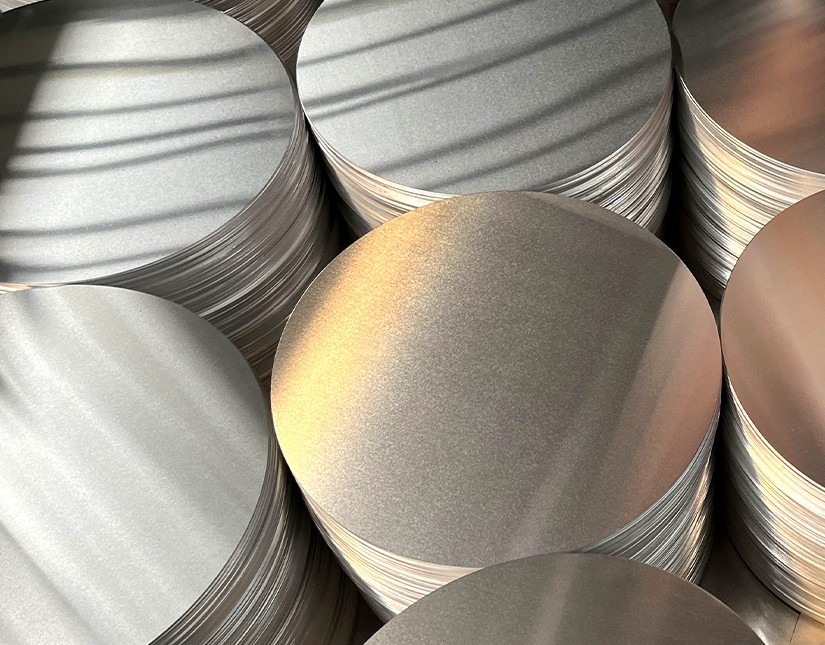
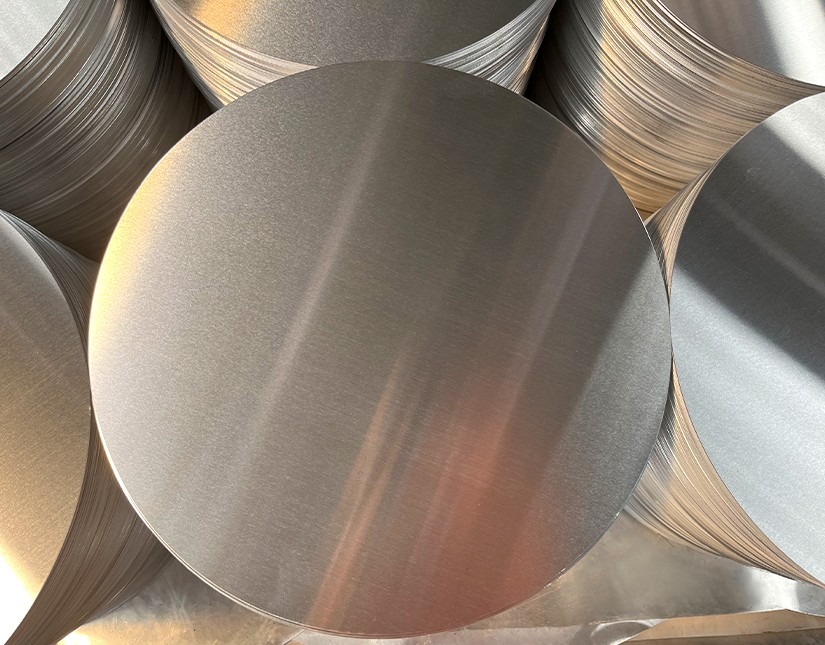
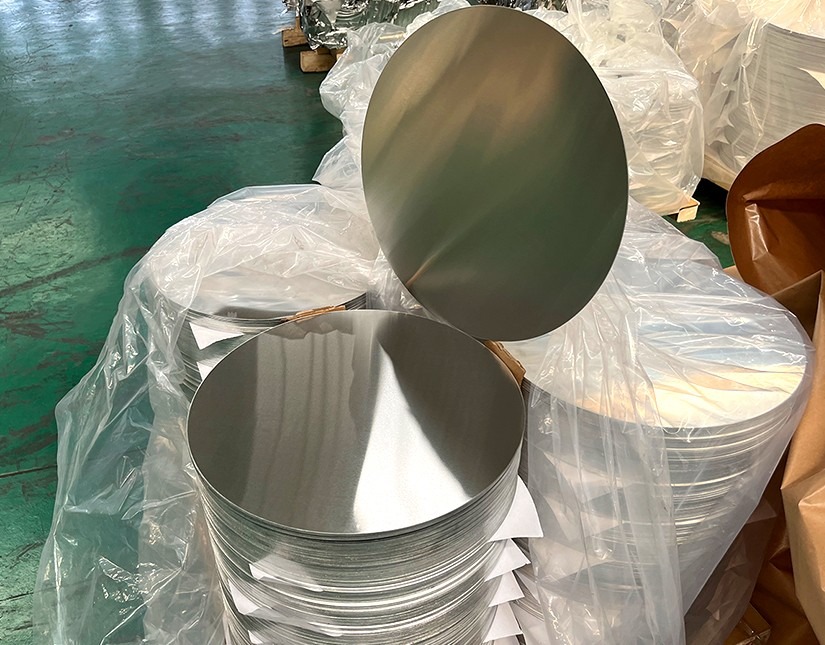
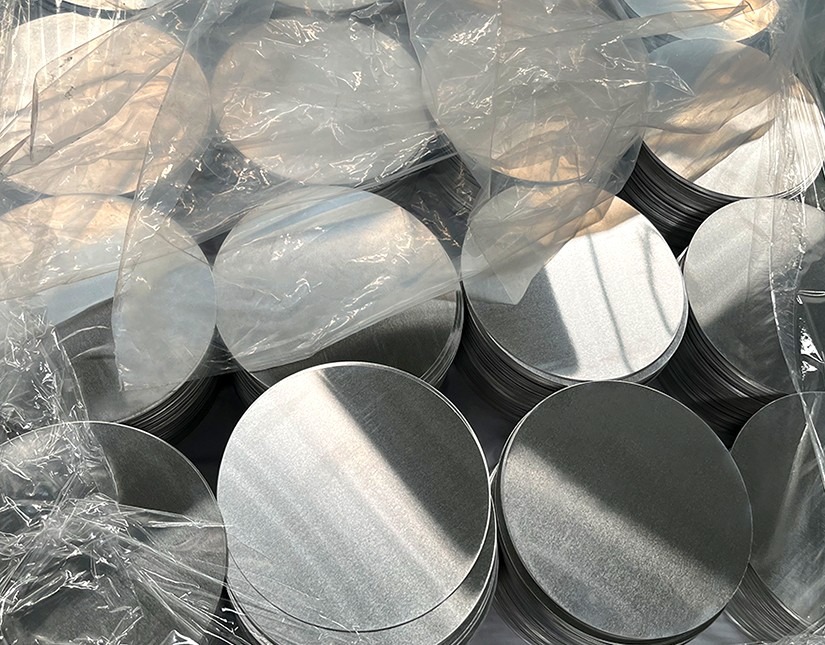
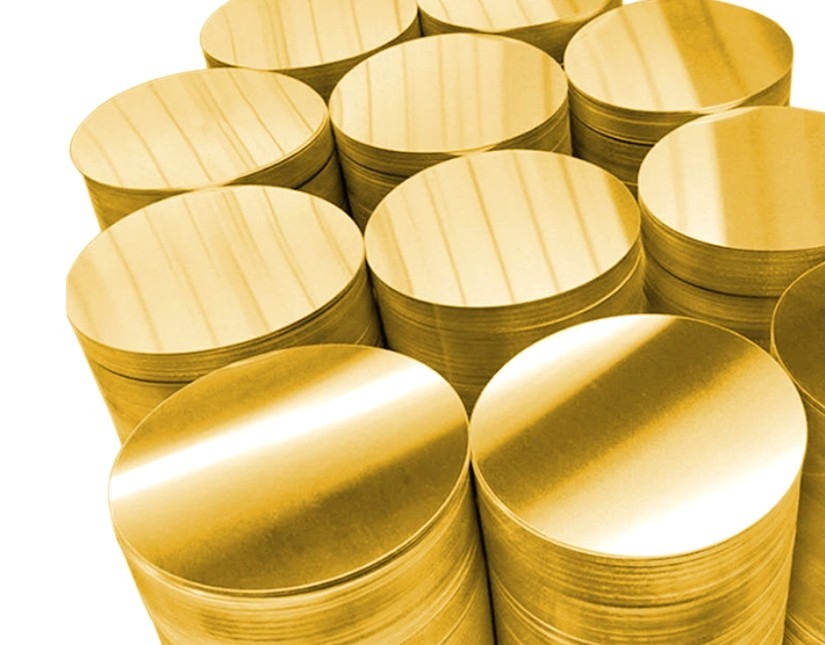
Aluminum circle, also called aluminum circle disc, aluminum disc or round aluminum blank, is a flat circular aluminum product used for deep drawing, spinning, stamping and other forming processes.
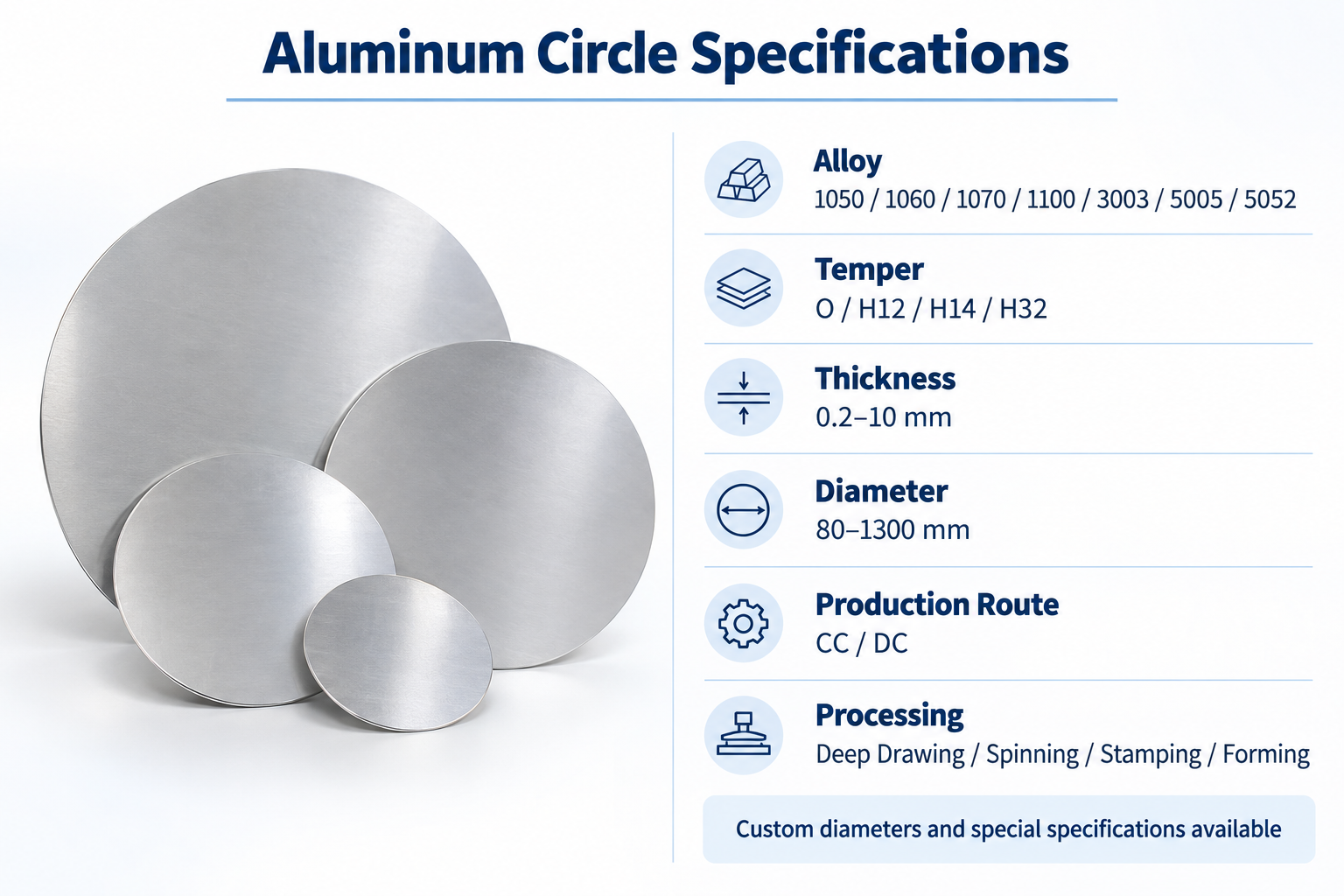
Worthwill supplies aluminum circles in 1050, 1060, 1070, 1100, 3003, 5005 and 5052 alloys, with O, H12, H14 and H32 tempers. Available thickness ranges from 0.2 to 10 mm, while diameter ranges from 80 to 1300 mm.
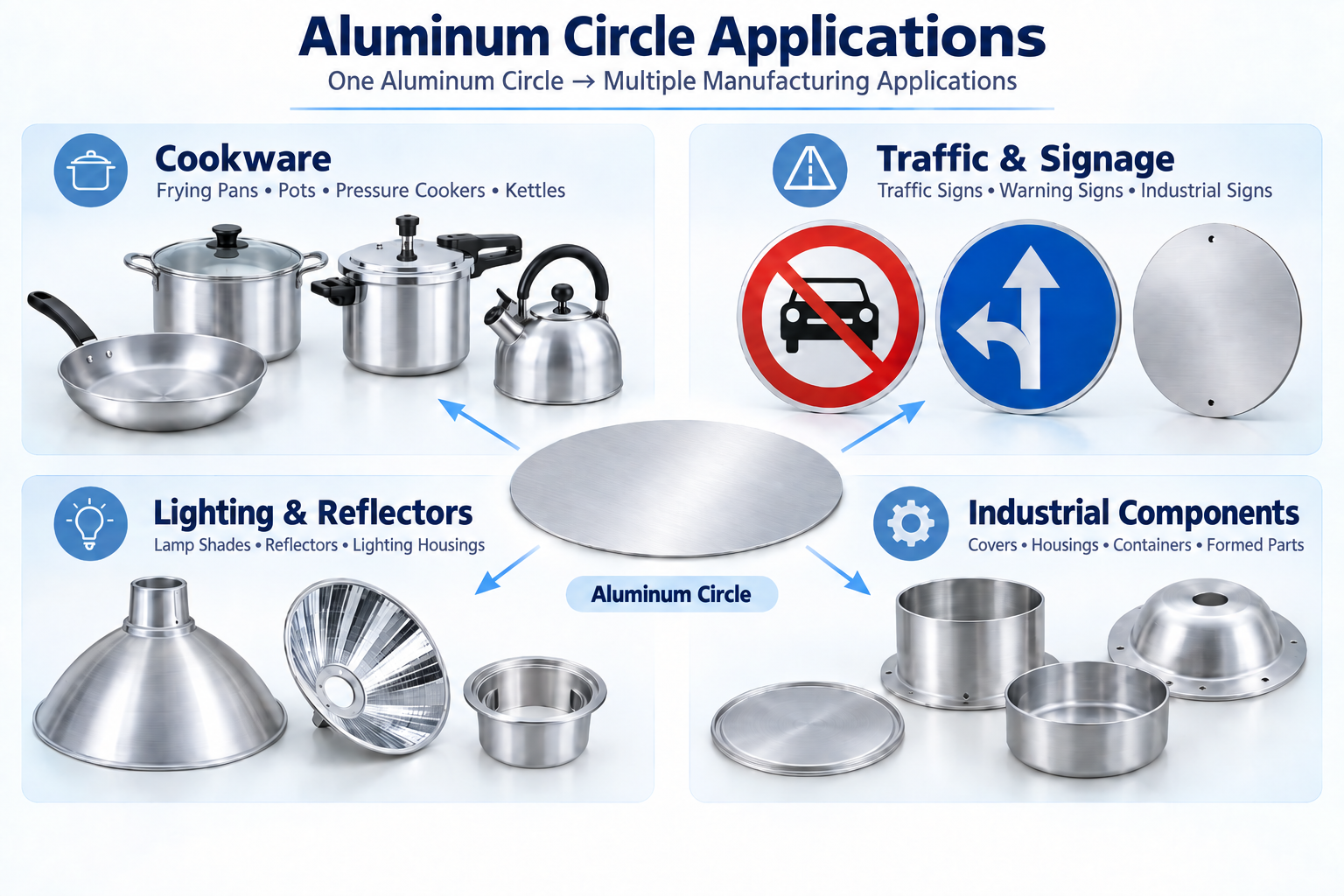
Aluminum circle discs are widely used for frying pans, cooking pots, pressure cookers, rice cooker inner pots, kettles, cookware lids, lighting components, traffic signs and other stamped or spun aluminum products.
Both CC and DC aluminum circles are available. The suitable alloy, temper and production route should be selected according to forming depth, surface requirements and the finished product.
Custom diameters and special specifications can be produced according to project requirements. When requesting a quotation, please provide the alloy, temper, thickness, diameter, quantity and intended application.
An aluminum circle is a round blank cut or punched from aluminum sheet or coil. It is supplied as a semi-finished material for manufacturers that need to deep draw, spin, stamp, press, polish, anodize or coat the aluminum into a finished component.
Compared with cutting circles from sheet during downstream production, purchasing ready-made aluminum discs can simplify material preparation and help manufacturers control blank diameter, material utilization and production consistency.
The most suitable aluminum circle specification depends on the finished product. Cookware factories usually focus on forming performance, thickness consistency and surface quality, while lighting, sign and industrial component manufacturers may place more emphasis on strength, reflectivity, corrosion resistance or surface finishing.
| Item | Available Specification |
|---|---|
| Product | Aluminum Circle / Aluminum Circle Disc / Aluminum Disc |
| Alloy | 1050 / 1060 / 1070 / 1100 / 3003 / 5005 / 5052 |
| Temper | O / H12 / H14 / H32 |
| Thickness | 0.2–10 mm |
| Diameter | 80–1300 mm |
| Production Route | CC / DC |
| Processing | Deep Drawing / Spinning / Stamping / Forming |
| Surface | Mill Finish |
| Customization | Custom Diameter and Special Specifications Available |
Cookware is one of the main applications for aluminum circles. A round aluminum blank can be formed into frying pans, saucepans, stock pots, pressure cooker bodies, rice cooker inner pots, kettles, cookware lids, pizza pans and other kitchen products.
For cookware production, the circle must withstand substantial deformation during deep drawing or spinning. The correct combination of alloy, temper, thickness and diameter therefore matters more than simply purchasing an aluminum disc of the right size.
A material that is too hard for the forming process may increase the risk of cracking or edge tearing. Inconsistent material properties may also contribute to wrinkles, uneven walls or unstable forming results. For deeper drawing operations, buyers commonly evaluate softer tempers such as O temper according to the selected alloy and forming process.
If you manufacture cookware, it is useful to provide the finished product type and forming method together with the basic dimensions. This makes it easier to select a suitable aluminum circle rather than choosing by alloy number alone.
Deep drawing converts a flat aluminum circle into a three-dimensional component by drawing the material into a die. Spinning forms the circle over a rotating tool or mandrel. Both processes require good material consistency and suitable ductility.
Typical deep-drawn and spun products include cookware bodies, pressure cooker shells, lamp shades, lighting reflectors, appliance parts and industrial containers.
For demanding forming applications, buyers should pay attention to more than thickness and diameter. Temper consistency, surface condition, grain behavior, edge quality and the relationship between blank diameter and finished part geometry can all influence production results.
Worthwill can supply different alloy and temper combinations for different forming requirements. Send us your finished product, drawing or forming process when the application involves deep drawing or spinning.
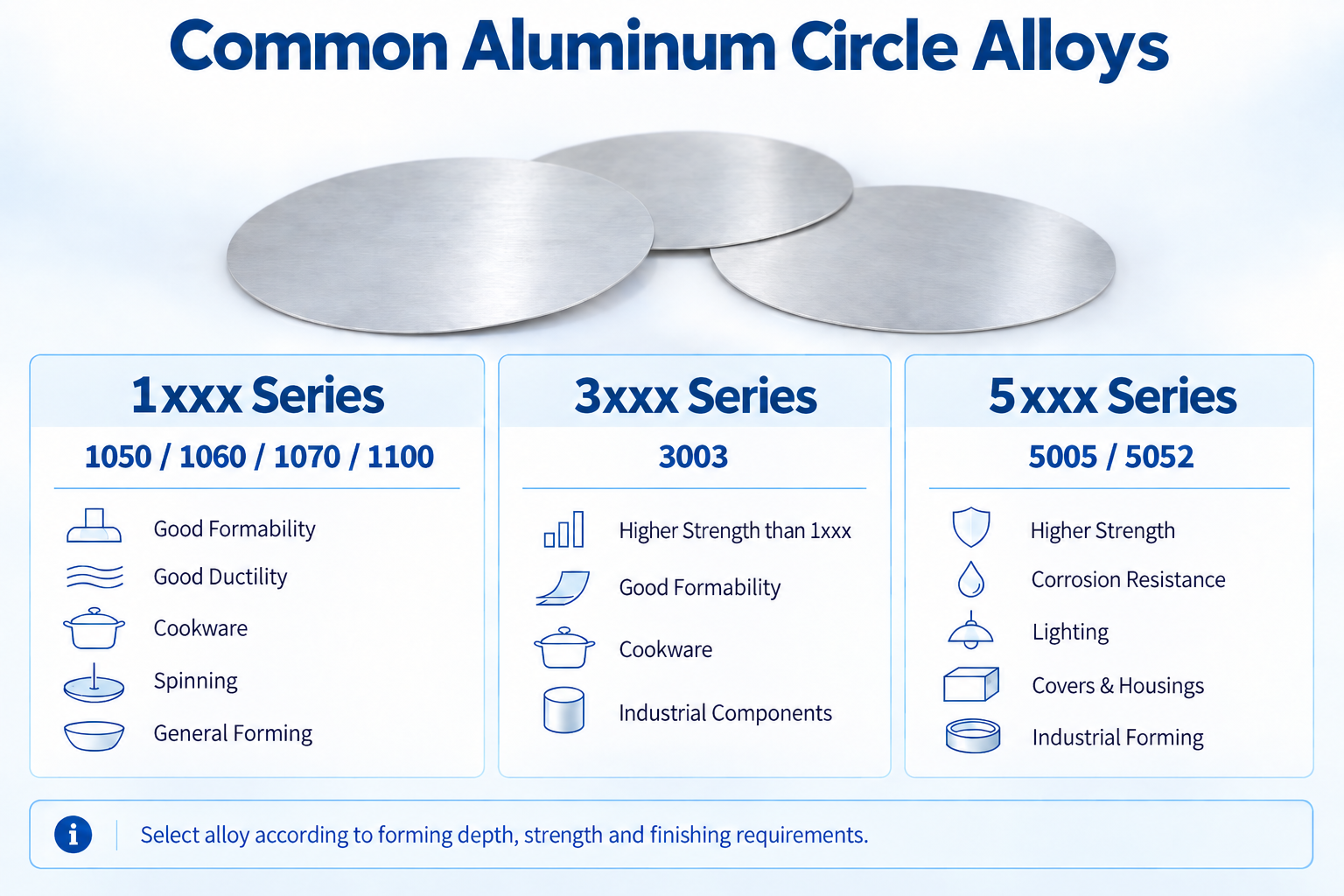
| Alloy | Main Characteristics | Typical Applications |
|---|---|---|
| 1050 | High aluminum content and good formability | Cookware, kitchenware, spinning and general forming |
| 1060 | Good ductility, thermal conductivity and forming performance | Pots, pans, utensils and lighting components |
| 1070 | High aluminum content with good forming and surface properties | Cookware, reflectors and formed components |
| 1100 | Good formability, corrosion resistance and finishing properties | Cookware, containers and general stamped parts |
| 3003 | Higher strength than 1xxx series while retaining good formability | Cookware, pressure-formed parts and industrial components |
| 5005 | Good corrosion resistance and surface finishing capability | Decorative, lighting and formed aluminum components |
| 5052 | Higher strength and corrosion resistance for more demanding applications | Industrial forming, covers, housings and specialized components |
The final alloy selection should be based on the required strength, forming depth, finishing process and service environment rather than application name alone.
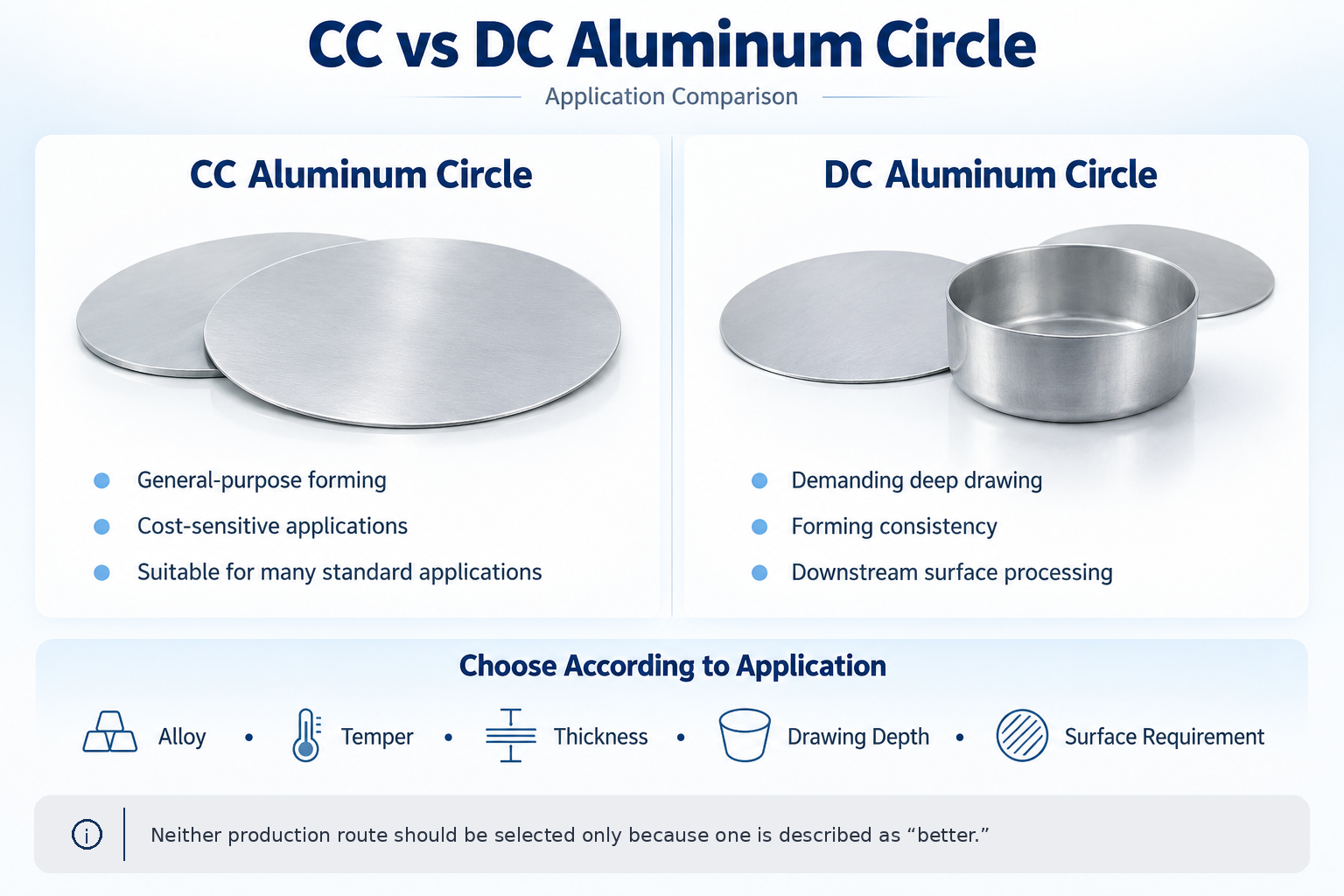
Worthwill supplies both CC and DC aluminum circles.
CC material can be suitable for many general-purpose forming and cost-sensitive applications. DC material is often considered when the project has more demanding requirements for deep drawing, forming consistency or downstream surface processing.
Neither production route should be selected only because one is described as “better.” The correct choice depends on alloy, temper, thickness, drawing depth, forming equipment and the final surface requirement.
For projects involving deep cookware bodies or multiple forming stages, tell us the finished product and production process so the material can be matched to the application.
Frying pans and cooking pots are produced from aluminum circles through pressing, deep drawing or spinning. The starting blank diameter and thickness are selected according to the dimensions and wall geometry of the finished cookware.
Pressure cooker bodies and deeper cookware shapes normally place greater demands on material formability because the aluminum must flow further during forming. Stable material properties help manufacturers achieve more repeatable production from one batch to the next.
After forming, the aluminum cookware may undergo additional operations such as polishing, anodizing, coating, machining or handle assembly. The required downstream process should therefore also be considered when choosing the starting aluminum disc.
Aluminum circles are also used to manufacture lamp shades, lighting housings and reflector components through spinning, pressing and stamping.
For these products, manufacturers often pay attention to surface uniformity, forming behavior and the quality of the finished surface after polishing or other treatment.
The suitable alloy and temper depend on whether the part is primarily decorative, reflective or structural.
Round aluminum blanks can be used as substrates for circular traffic signs, warning signs, industrial signs and other flat or lightly formed components.
Aluminum circles are also used for stamped appliance components, covers, housings, containers and other industrial parts where a round starting blank improves material utilization or simplifies production.
For applications outside cookware, please provide the finished part, forming process and required surface treatment so that the specification can be reviewed according to the actual production requirement.
A useful aluminum circle inquiry should contain more than the words “aluminum disc.”
Please provide the required alloy, temper, thickness, diameter and quantity. It is also helpful to tell us the final application, forming method and any special surface or dimensional requirements.
For example, a cookware manufacturer may specify the circle for a frying pan and state that the part will be deep drawn, while an industrial manufacturer may provide a drawing showing the finished component and forming dimensions.
Providing this information at the quotation stage helps reduce specification misunderstandings and makes material selection more efficient.
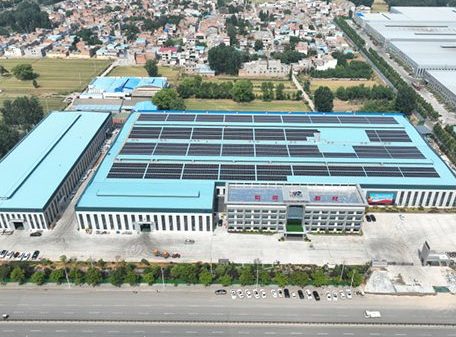
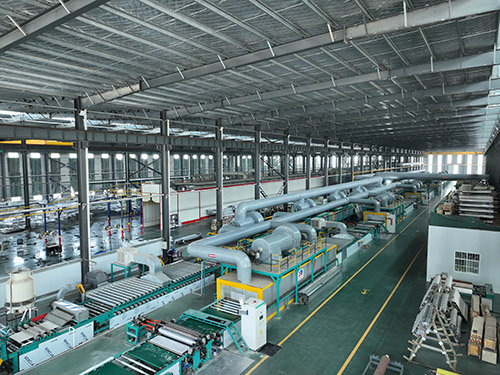
Worthwill supplies aluminum products for international industrial and manufacturing customers, including customized aluminum circle specifications for cookware and forming applications.
Our available range covers multiple 1xxx, 3xxx and 5xxx series alloys, several temper options, thicknesses from 0.2 to 10 mm and diameters from 80 to 1300 mm.
Different customers use aluminum circles in different production environments, so we focus on matching the material specification to the actual manufacturing process rather than recommending one standard grade for every application.
Tell us what you are making, how you form it and what dimensions you require. We can then discuss the suitable aluminum circle specification for your project.
In most purchasing and manufacturing contexts, aluminum circle and aluminum disc describe the same type of round aluminum blank. Buyers may also search for aluminum circle disc, aluminum round blank or round aluminum sheet.
1050, 1060, 1070, 1100 and 3003 are commonly considered for cookware and forming applications. The correct choice depends on required strength, forming depth, temper, thickness and the cookware production process.
O temper provides a softer material condition and is commonly evaluated for applications requiring significant forming or deep drawing. The suitable temper still depends on the alloy and the geometry of the finished component.
Please provide alloy, temper, thickness, diameter, quantity and application. For deep drawing or spinning projects, the finished product or forming method is also helpful.
| Commodity | Alloy | Temper | Thickness (mm) | Diameter (mm) |
|---|---|---|---|---|
| Aluminum Circle | 1050 / 1060 / 1070 / 1100 / 3003 / 5005 / 5052 | O / H12 / H14 / H32 | 0.2–10 | 80–1300 |
Remark: Special specifications can be customized according to customer requirements. Multiple circle mould sizes are available, including diameter options in 5 mm increments.
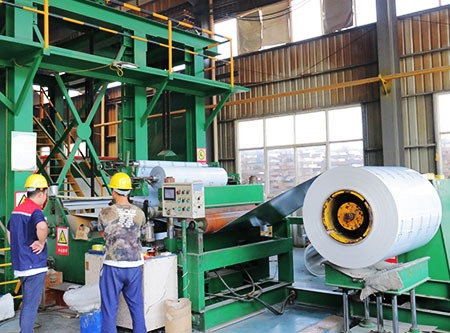
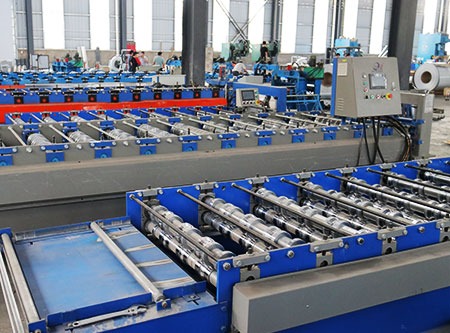
Send us your product, alloy, size, quantity and application requirements for a detailed quotation.