


Position: Home > Applications > Signage & Printing
An aluminum sign board starts with the right substrate. Before a sign is printed, laminated, cut or installed, its aluminum sheet must be selected for the required strength, surface finish, fabrication method and service environment.
A prepainted aluminum sheet for a retail sign, a specially coated aluminum panel for sublimation printing and a prepared aluminum blank for a reflective traffic sign may look similar, but they serve different production requirements.
Henan Worthwill Industry Co., Ltd. supplies aluminum sheets, prepainted aluminum coils, anodized aluminum and sublimation-coated blanks for sign manufacturers, printing businesses, material distributors and OEM fabricators. Our primary focus is supplying the aluminum material used to manufacture signs, rather than finished printed or installed signage.
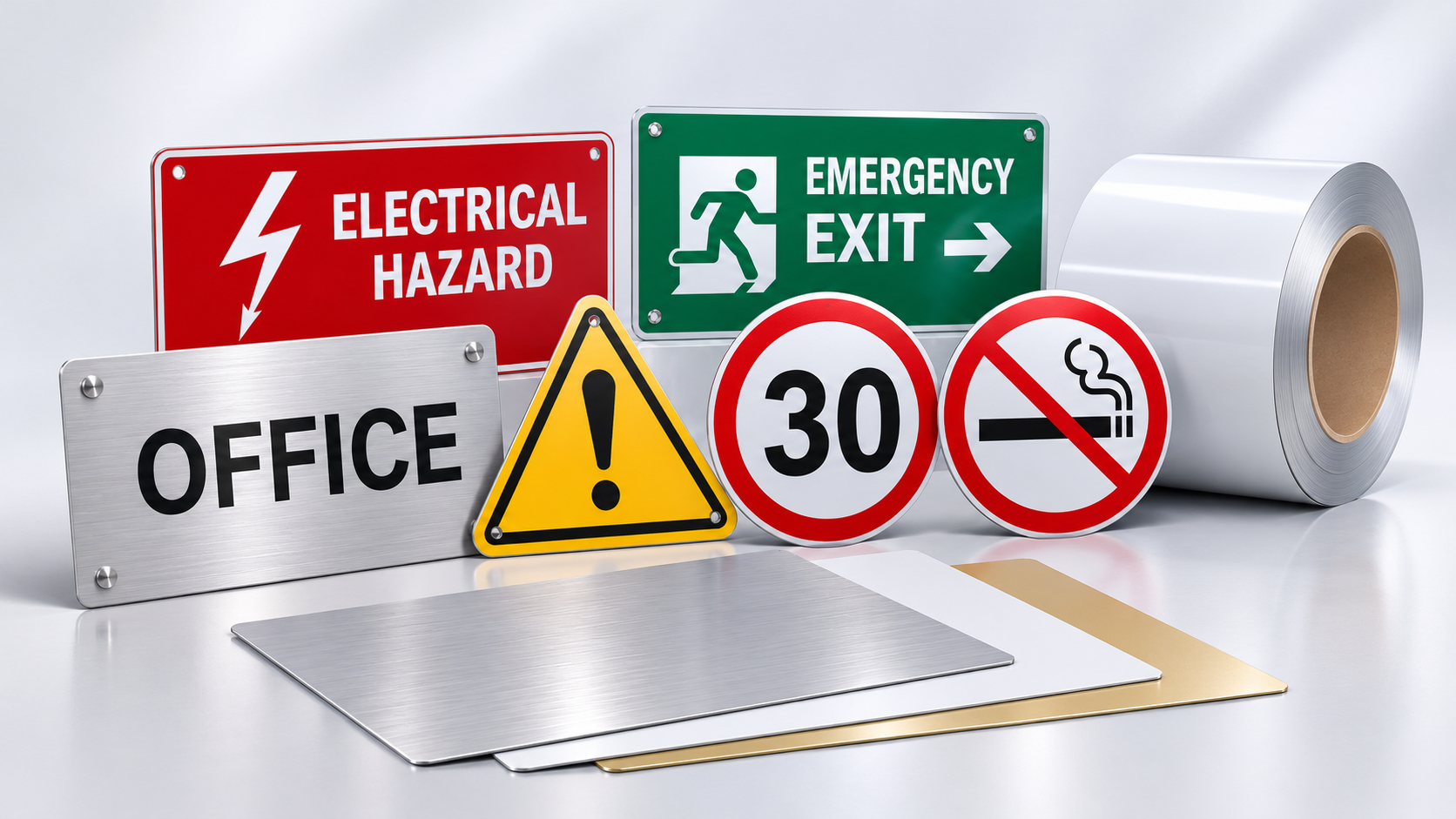
For most commercial advertising signs and general wayfinding panels, prepainted aluminum sheet is a practical starting point. It provides a consistent background color and can be selected for further printing or graphic lamination, subject to surface compatibility.
For decorative metallic signs, anodized aluminum provides a distinctive metal appearance. For heat-transfer photo printing, a purpose-made sublimation coating is required. Reflective road signs, meanwhile, need aluminum substrates that meet the applicable authority’s specifications and the reflective film manufacturer’s requirements.
The best material depends on what the sign manufacturer plans to do with the aluminum after delivery.
Aluminum sheets are used as substrates for shop signs, company nameplates, office identification panels, wall-mounted advertising boards and retail displays.
Prepainted aluminum sheet is useful when a uniform white or colored background is required. Depending on the coating specification, the surface may be suitable for vinyl graphics, screen printing or direct digital printing after compatibility testing.
Outdoor advertising panels need to withstand moisture, sunlight, temperature changes and regular cleaning. Aluminum offers a lightweight, corrosion-resistant base that can be cut and mounted using suitable supporting frames.
For exposed locations, coating weatherability, panel dimensions, fixing points and structural support matter as much as the aluminum thickness.
Directional signs, facility identification panels, parking signs and industrial safety notices can be manufactured from flat aluminum sheet.
The selected alloy, temper and thickness should provide enough stiffness for the installation method. The surface must also work with the intended printed graphics, adhesive film or protective laminate.
Aluminum is widely used as a rigid substrate for reflective traffic signs. However, public-road signage should not be treated in the same way as ordinary advertising boards.
Traffic sign manufacturers must check the required alloy and temper, sheet thickness, surface preparation and retroreflective sheeting specification. Local road authority requirements take priority over general commercial signage recommendations.
Smaller aluminum panels are used for printed plaques, personalized signs, photo displays and decorative nameplates.
For dye sublimation printing, the aluminum must have a coating specifically designed to receive sublimation dyes. Ordinary painted or mill finish aluminum should not be assumed to work with the same heat-transfer process.
| Aluminum material | Typical sign application | Main advantage | What buyers should check |
|---|---|---|---|
| Mill finish aluminum sheet | Fabricated sign blanks and prepared reflective sign substrates | Flexible surface preparation options | Alloy, temper, flatness, cleaning and surface treatment |
| Prepainted aluminum sheet or coil | Commercial signs, advertising boards and colored sign panels | Consistent color and efficient bulk fabrication | Coating type, printing adhesion and outdoor exposure |
| Anodized aluminum sheet | Metallic nameplates, decorative signs and identification panels | Metallic appearance and hard anodic surface | Anodizing quality, color, sealing and fabrication sequence |
| Sublimation aluminum sheet | Printed photo panels, plaques and customized small signs | Coating designed for dye sublimation | Printable face, coating compatibility and heat-press settings |
| Color coated aluminum strip | Channel letter sides and three-dimensional sign fabrication | Narrow coil format for forming sign returns | Strip width, coating flexibility and forming requirements |
For large-volume commercial sign manufacturing, color coated aluminum coil and sheet is often an efficient material choice.
Worthwill supplies coated aluminum in coil, cut-to-length sheet and slit-strip forms. Available coating systems include PE polyester, HDP and PVDF, with different color, gloss and surface protection options.
White and colored prepainted aluminum can be considered for sign faces, printed panels and advertising substrates. However, direct UV printing, screen printing or adhesive graphic application must be tested against the actual coating.
Anodized aluminum sheet and coil is suitable for signs where the metallic surface is part of the design.
Natural silver, satin, brushed-effect and selected colored anodized finishes are used for decorative identification panels, office signage, nameplates and architectural details.
The anodic layer provides a hard surface, but printing adhesion, engraving performance and outdoor color stability still depend on the specific finish.
For photo-quality heat-transfer printing, aluminum sublimation sheet and blanks are the appropriate material category.
These panels use a specially prepared coating that receives sublimation dyes during heat pressing. They can be supplied for personalized signs, photo panels, printed plaques and other customized products.
A standard white PE or PVDF coated aluminum sheet is not automatically a substitute for a sublimation-coated panel.
The aluminum alloy affects strength, formability, corrosion resistance and the way the sign panel behaves during cutting, bending and installation.
1100 aluminum: A highly formable option for light-duty panels and decorative sign components where high strength is not the main requirement.
3003 and 3105 aluminum: Practical choices for general fabricated signs, painted panels and formed components when the selected temper and dimensions meet the application requirements. See our 3003 aluminum sheet and coil.
5005 aluminum: Often considered for decorative applications where appearance and anodizing quality are important.
5052 aluminum: Provides higher strength and corrosion resistance for more demanding sheet-metal applications. 5052 aluminum sheet and coil can be considered when the required temper is available.
6061 aluminum: A higher-strength option used in selected structural or specified sign components, with fabrication requirements depending on temper.
Important for traffic signs: Some reflective sheeting manufacturers and transportation authorities specify materials such as 5052-H38 or 6061-T6. These should not be replaced with ordinary 3003 or 3105 material without approval. The project specification must determine the final alloy and temper.
There is no single best thickness for every aluminum sign board.
A small indoor identification sign supported by a wall has different stiffness requirements from a large outdoor sign exposed to wind. Panel width, unsupported span, mounting points, alloy and temper all affect the result.
| Aluminum thickness | Possible application | Selection consideration |
|---|---|---|
| 0.5–1.0 mm | Small indoor panels, decorative signs and supported sign faces | Check flatness and support to prevent visible bending |
| 1.0–2.0 mm | Medium-sized commercial signs and framed advertising panels | Match thickness to panel size, fixing method and alloy |
| 2.0–3.0 mm and above | Larger or more demanding solid aluminum sign panels | Confirm structural loads, stiffness and mounting design |
These are preliminary material-selection ranges, not structural design specifications or traffic-sign compliance requirements. Large outdoor signs and regulated road signs must follow the relevant engineering and authority requirements.
Worthwill’s general prepainted aluminum sheet and coil production range covers 0.20–5.00 mm thickness, subject to the alloy, temper, coating system, dimensions and order requirements.
A smooth aluminum surface does not automatically guarantee good ink adhesion. Ink formulation, coating chemistry, surface contamination, curing conditions and the printing equipment all influence the result.
For direct-to-substrate printing, sign manufacturers should approve a printed sample and test adhesion before ordering production quantities.
Prepainted aluminum sheets can be suitable substrates for vinyl lettering, printed film and graphic lamination.
The surface should be clean, stable and compatible with the selected adhesive. Coating texture, gloss, surface energy and protective-film residue can affect bonding performance.
Reflective film requires a suitable, correctly prepared substrate. Cleanliness, surface energy, flatness and the required chemical treatment are important for adhesion and long-term performance.
The 3M substrate preparation guide identifies properly prepared aluminum as a reliable substrate and does not recommend powder-coated surfaces for its retroreflective sign sheeting applications.
ASTM D4956 covers retroreflective sheeting for traffic control devices. It should not be mistaken for a general certification of aluminum sign blanks.
Sublimation printing transfers dyes into a compatible receiving coating under heat and pressure.
The aluminum blank, coating, paper, ink and heat-press settings must be tested together. Conventional mill finish aluminum and ordinary decorative color coatings are not equivalent to sublimation-ready surfaces.
For commercial outdoor signage, coating selection should reflect the expected exposure rather than color alone.
PE polyester: A practical option for many indoor and general commercial sign applications where cost and color flexibility are priorities. See PE coated aluminum.
HDP polyester: Can provide improved weathering performance compared with conventional polyester when a suitable formulation is specified.
PVDF coating: Often considered for demanding exterior exposure where color retention and long-term weatherability are important. See PVDF coated aluminum coil and sheet.
The coating chosen for weather resistance must also be compatible with the intended printing, bonding or lamination process.
For outdoor panels, buyers should also consider exposed cut edges, fastener contact, drainage, cleaning chemicals and protection during fabrication. A premium coating cannot compensate for an unsuitable panel design or poor installation.
Even a suitable alloy can produce disappointing signs when the material specification does not match the manufacturing process.
Panel warping: Thin sheets may show visible distortion when the unsupported area is too large or the material is not adequately leveled.
Poor print or film adhesion: Surface contamination, incompatible coatings and inadequate pretreatment can cause peeling or bonding failures.
Scratches during cutting: Decorative and prepainted surfaces need appropriate handling, cutting methods and protective packaging.
Coating cracks around bends: A coating may perform well on a flat panel but crack after tight bending or forming.
Color differences between batches: Repeat signage projects should use an approved physical color and gloss reference.
A pre-production sample can help identify these problems before large-scale fabrication.
Worthwill focuses on supplying the aluminum materials used by downstream sign manufacturers.
Our relevant material options include:
Color coated aluminum coil and sheet: For general commercial signage, colored panels and downstream fabrication.
Mill finish aluminum sheet: For buyers who carry out their own surface treatment, printing preparation or fabrication.
Anodized aluminum sheet: For metallic decorative signs and appearance-sensitive panels.
Aluminum sublimation sheets and blanks: For heat-transfer printing and customized printed products.
Aluminum channel letter strip: For the side returns of three-dimensional letters rather than flat sign faces. See our aluminum channel letter strip.
For regular aluminum coil and sheet orders, the typical MOQ is 3 metric tons. Aluminum sublimation sheets have a typical starting MOQ of 100 pieces. Final quantities and available processing depend on the selected specification.
Finished artwork, reflective films, printing, mounting structures and on-site sign installation are outside the normal scope of this material-supply page.
To help us recommend a suitable aluminum sheet or coil, please provide:
Application: Retail sign, advertising panel, wayfinding sign, decorative sign or regulated traffic sign.
Material type: Mill finish, prepainted, anodized or sublimation-coated aluminum.
Alloy and temper: Specify the required grade, or provide the performance requirements for review.
Thickness and dimensions: Sheet thickness, width, length or coil width, together with the finished panel size.
Printing or graphic process: UV printing, screen printing, vinyl lamination, reflective sheeting or dye sublimation.
Exposure and installation: Indoor or outdoor use, climate, supporting frame and mounting arrangement.
Surface requirements: Color, gloss, coating type, protective film and any approved physical sample.
Quantity and destination: Required volume, delivery destination and relevant project standards.
For projects involving traffic signs or other regulated products, please also provide the applicable authority’s material specification.
No. A solid aluminum sign board uses aluminum sheet as its substrate. An aluminum composite panel normally has two thin metal skins bonded to a core. Their stiffness, weight, fabrication methods and suitability for different sign applications are not identical.
For general commercial signage, 1100, 3003, 3105 and 5005 may be considered depending on the required strength, forming and surface finish. For demanding or regulated traffic signs, the required alloy and temper must follow the project specification.
It may be suitable when the coating and ink system are compatible. A sample printing and adhesion test should be completed before bulk production.
Not unless the white coating is specifically designed and verified for dye sublimation. Standard decorative polyester or PVDF coatings should not be assumed to accept sublimation dyes.
The required thickness depends on the sign dimensions, unsupported span, alloy, mounting system and design loads. Large outdoor signs should be assessed against structural requirements rather than selected by thickness alone.
Yes, when the alloy, temper, surface preparation, reflective sheeting and fabrication comply with the relevant project and regulatory requirements. General commercial sign specifications should not be used as a substitute.
Worthwill primarily supplies aluminum sheet, coil and selected processed blanks for sign manufacturers and distributors. Customers normally complete printing, graphic application and final sign assembly downstream.
Whether you manufacture commercial advertising boards, decorative nameplates or printed aluminum panels, the right substrate can make production more consistent and reduce unnecessary rework.
Henan Worthwill Industry Co., Ltd. can discuss suitable aluminum materials based on your required alloy, temper, thickness, surface finish, processing method and order quantity.
Contact Worthwill with your material specifications, drawings or intended printing process to request a quotation.