


Choosing between powder coated and anodized aluminum is not simply a matter of picking a color. Both finishes can protect aluminum and improve its appearance, but they are made differently and behave differently in service.
For buyers sourcing aluminum sheets, panels, coils or fabricated components, the choice affects corrosion resistance, surface wear, color consistency, fabrication and long-term maintenance. Understanding these differences helps avoid ordering a finish that looks right on a sample but performs poorly in the finished application.
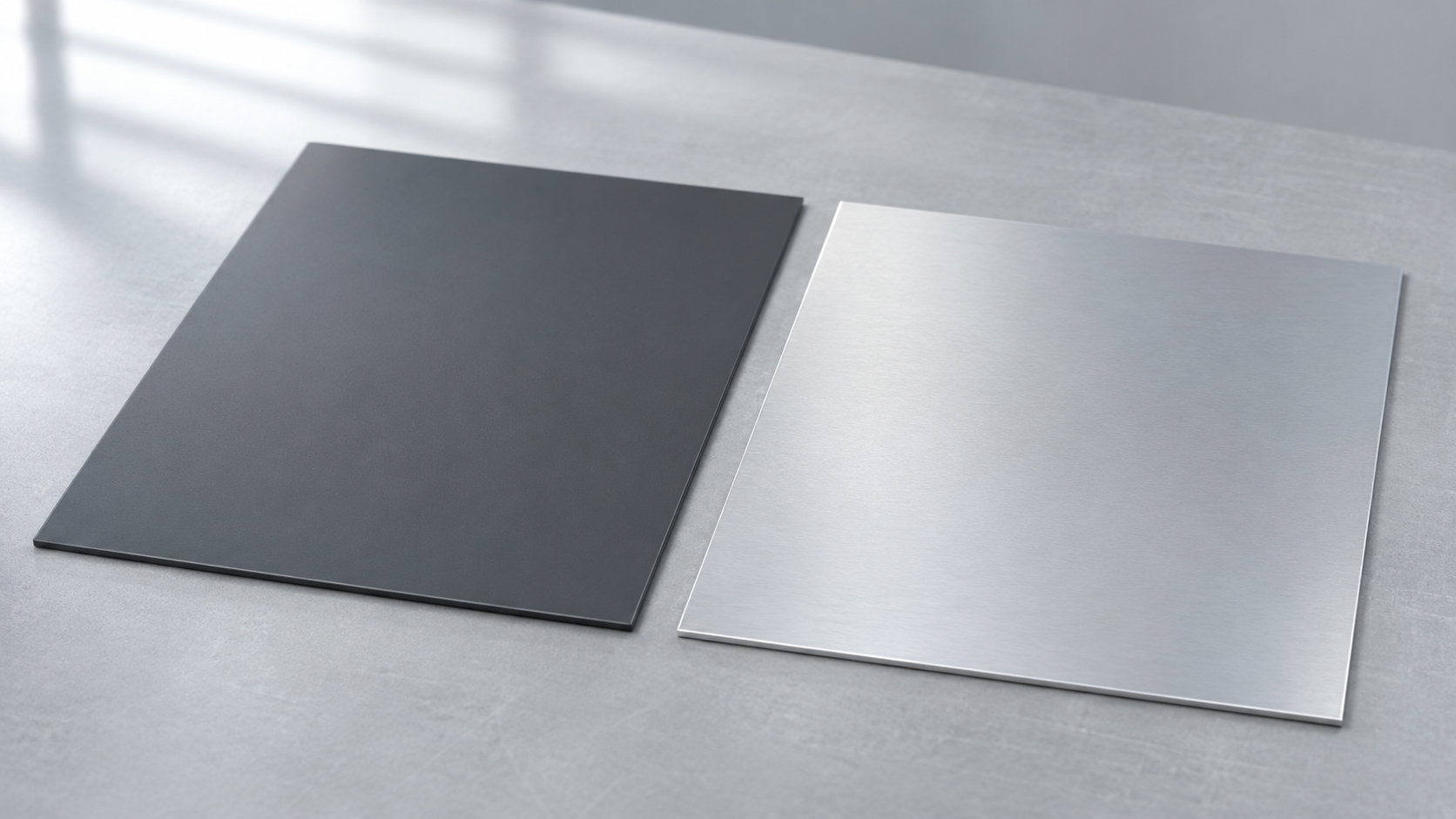
The main difference is how the protective surface is formed. Powder coating applies a cured organic film over aluminum, while anodizing converts the aluminum surface into a protective oxide layer.
Powder coated aluminum is usually the more flexible choice for opaque colors, custom finishes and decorative architectural components. Anodized aluminum is often preferred when a metallic appearance, a hard surface and resistance to everyday abrasion are important.
Neither finish is automatically more durable in every environment. Long-term performance depends on the coating specification, aluminum substrate, surface preparation, exposure conditions and maintenance.
Powder coated aluminum is produced by applying finely ground resin-based powder to a properly prepared aluminum surface, typically using an electrostatic spray process. The coated material is then heated to cure the powder into a continuous protective film.
The resulting finish provides a wide selection of colors, gloss levels and textures. It can also cover minor visual differences in the underlying aluminum more effectively than a transparent metallic finish.
Powder coating is commonly used for architectural panels, window and door components, metal enclosures, furniture, signs and decorative sheet-metal products.
However, powder coating quality depends heavily on pretreatment, powder formulation, film thickness and curing conditions. A poorly prepared surface or unsuitable coating system can lead to peeling, blistering, fading or corrosion around damaged areas.
Anodized aluminum is produced through an electrochemical process that increases the natural aluminum oxide layer on the metal surface. Unlike a conventional paint film, the anodic layer is formed from the aluminum itself.
This oxide layer is hard and can provide good resistance to abrasion and corrosion. Anodized surfaces are often used where the natural metallic character of aluminum is part of the design.
The finish can be natural silver, bronze, black, gold or other approved colors, depending on the anodizing and coloring processes. Sealing is also an important part of many anodizing systems because it helps improve corrosion and staining resistance.
Anodizing does not make aluminum indestructible. Incorrect sealing, unsuitable alloys, aggressive chemicals or physical damage can still affect its appearance and performance.
| Feature | Powder Coated Aluminum | Anodized Aluminum |
|---|---|---|
| Surface formation | Organic film applied over aluminum | Oxide layer formed from aluminum |
| Typical appearance | Opaque, smooth or textured | Metallic, satin or decorative |
| Color options | Very broad range | More process-dependent |
| Scratch and abrasion resistance | Depends on coating formulation | Hard oxide generally resists abrasion well |
| Corrosion resistance | Good with correct pretreatment and coating | Good with suitable anodic film and sealing |
| UV and weather resistance | Depends on resin and pigment system | Depends on anodizing and coloring system |
| Chipping or peeling | Possible when film adhesion is compromised | Does not peel like an applied paint film |
| Fabrication | Often coat after forming | Finish sequence depends on product and design |
| Touch-up | Local repair may be possible | Matching damaged anodizing is difficult |
| Best-known advantage | Color and design flexibility | Metallic appearance and hard surface |
The table describes general material behavior, not guaranteed performance for every coating grade.
Durability is often the deciding factor, especially for exterior cladding, building components and industrial equipment. However, it is useful to separate durability into several different properties.
Both powder coated and anodized aluminum can perform well in environments where moisture and atmospheric pollutants are present.
For powder coated aluminum, corrosion resistance depends on the pretreatment system, coating integrity and protection of edges and damaged areas. If the film is scratched through to the substrate, moisture may reach the exposed aluminum.
Anodized aluminum relies on the protective oxide layer and, for many applications, effective sealing. A properly specified anodized finish can provide strong resistance to normal atmospheric corrosion, but it can still be attacked by unsuitable chemicals or aggressive environments.
For coastal or industrial installations, buyers should specify the actual exposure conditions rather than assuming either finish is automatically suitable for salt-laden air.
Anodized aluminum generally has an advantage where resistance to surface abrasion is important. Its oxide layer is hard and integral to the aluminum surface.
Powder coating provides a protective polymer film that can resist ordinary handling and impact, but the result depends on the coating formulation. Hard contact, sharp edges and repeated rubbing may scratch or chip the film.
For frequently handled decorative parts, trims and panels, anodizing may offer practical benefits. For components where color flexibility and impact tolerance matter more, a suitably specified powder coating can be a better fit.
Anodized aluminum is often selected for its metallic appearance and weathering performance. However, the color stability of anodized finishes depends on the coloring method, film quality and exposure conditions. Not every dyed anodized color has the same outdoor durability.
Powder coating also varies considerably. Standard polyester powders and higher-performance exterior powder systems should not be treated as equivalent.
If long-term color retention is important, buyers should ask for documented weathering performance, an approved color sample and the appropriate coating specification.
Both finishes benefit from regular cleaning with appropriate, non-abrasive methods.
Powder coated surfaces should be inspected for chips, scratches and coating damage. Small areas may sometimes be repaired with a compatible touch-up coating, although the repaired area may not match the original appearance perfectly.
Anodized aluminum does not normally chip or peel like paint, but deep scratches can damage the anodic layer and are difficult to restore invisibly.
Neither finish should be cleaned with aggressive chemicals without checking the manufacturer’s maintenance recommendations.
For architectural powder coating, the FGIA/AAMA 2603, 2604 and 2605 specifications are commonly used to define different levels of organic coating performance. The 2026 editions cover pigmented organic coatings on aluminum extrusions and panels, including relevant coil coating provisions.
The appropriate grade should be selected according to the project specification and exposure requirements. Simply describing a product as “powder coated” does not establish its weathering or corrosion performance.
For architectural anodizing, AAMA 611-26 provides a reference for anodized architectural aluminum. ASTM B580-25 is another relevant specification for anodic oxide coatings.
Anodizing requirements should include the relevant finish class, anodic film thickness, coloring and sealing conditions where applicable.
These standards are specification references, not automatic evidence that a particular supplied product has been tested or certified to them.
Powder coating is usually the easier option when a project requires a specific opaque color, RAL reference, matte finish, high gloss or textured surface.
Anodizing is often chosen when the designer wants aluminum to retain its metallic character. Brushed anodized aluminum, natural silver and bronze finishes can provide a distinct appearance that conventional opaque coatings do not reproduce in exactly the same way.
Anodized color can be influenced by alloy composition, surface preparation and production conditions. This makes substrate selection and sample approval particularly important for large architectural projects.
For either finish, buyers should approve physical samples under the intended lighting conditions and agree on acceptable color and gloss variation before production.
The fabrication sequence is an important difference that buyers sometimes overlook.
Powder coating is commonly applied after cutting, punching and bending. This helps avoid damaging the finished coating during fabrication, although suitably designed post-coating forming may be possible with the correct material and process.
Anodized aluminum can be supplied as finished sheet or coil for downstream processing, or components can be anodized after fabrication. The suitable route depends on the geometry, forming requirements and required appearance.
When working with pre-finished aluminum, tight bends, cut edges and deep forming operations require particular attention. The finishing supplier should confirm whether the proposed fabrication method is compatible with the selected surface treatment.
Exterior cladding and architectural panels: Powder coating is useful where controlled colors and decorative finishes are required. Anodizing is an option for metallic architectural appearances. Both require exposure-appropriate specifications.
Window frames, doors and architectural profiles: Either finish may be suitable. Powder coating provides broad color options, while anodizing retains a distinctive metallic finish.
Signage, decorative panels and appliance housings: Powder coated aluminum is practical for consistent opaque colors. Anodized sheet is useful for metallic nameplates, trim and appearance-sensitive components.
Frequently handled components: Anodized aluminum can be advantageous where abrasion resistance and a hard metallic surface are priorities. The alloy and finish specification should still match the service conditions.
Not necessarily. This distinction matters when purchasing material for continuous manufacturing.
Powder coating is commonly applied as a dry powder to sheets, profiles or fabricated components and then cured. Conventional prepainted aluminum coil is normally coated with liquid systems such as PE, HDP or PVDF on a continuous roller-coating line before downstream fabrication.
For high-volume roll forming and coil-fed production, buyers should also consider color coated aluminum coil and sheet. The correct option depends on coating chemistry, forming requirements and the production process.
A useful quotation should include more than “powder coated” or “anodized.”
Aluminum substrate: Confirm alloy, temper, thickness, width, length and product form.
Finish type: State powder coating or anodizing, including the coating chemistry or anodic finish requirements where applicable.
Appearance: Specify color reference, gloss, texture, visible side and approved physical sample.
Exposure: Describe whether the material will be used indoors, outdoors, in coastal air or in an industrial environment.
Performance and inspection: Agree on applicable standards, film thickness, surface quality and any required testing or documentation.
Fabrication and packaging: Confirm cutting, bending, edge protection, protective film and transport requirements.
When comparing quotations, make sure suppliers are pricing the same substrate, finish and performance requirements.
Not in every application. Anodized aluminum is often preferred for its metallic appearance and abrasion-resistant oxide layer. Powder coated aluminum offers more flexibility in opaque colors, gloss and texture. The better choice depends on the intended use and required performance.
Both can be suitable for outdoor use when properly specified. The important considerations are exposure conditions, coating grade, surface preparation, anodic film and sealing quality, and maintenance. Coastal installations require additional attention.
Yes. Because powder coating is an applied organic film, impact, poor adhesion or unsuitable processing can cause chipping or peeling. Correct pretreatment and coating selection help reduce these risks.
Some anodized colors can change with prolonged exposure, especially when the coloring process is not suitable for the intended environment. Natural and appropriately colored architectural anodized finishes can offer good weathering performance, but the actual finish specification matters.
There is no universal price difference. Cost depends on aluminum alloy, dimensions, coating or anodizing requirements, color, order quantity, processing and inspection. The most useful comparison is between quotations based on the same finished-part requirements.
Powder coated and anodized aluminum are both established finishing options, but they solve different design and manufacturing problems.
Choose powder coating when broad color selection, opaque decorative finishes and flexible appearance requirements are the priority. Consider anodizing when a metallic finish, a hard surface and abrasion resistance are more important.
For aluminum sheets, panels or fabricated components, the most reliable approach is to confirm the substrate, finishing standard, fabrication sequence and service environment before placing an order.
Worthwill supplies powder coated aluminum sheet and coil and anodized aluminum sheet and coil for architectural, decorative and industrial applications. Share your alloy, dimensions, finish requirements, quantity and end use to discuss a suitable material specification.