


Buying aluminum facade panels is not only a matter of choosing a color and sending a drawing. A usable quotation also needs a shared definition of the aluminum substrate, finished dimensions, coating appearance, fabricated details, inspection reference and packing sequence. If those items remain open, two quotations may describe materially different scopes even when the panel name looks the same.
This aluminum facade panel buyer checklist is designed for the early RFQ stage. It helps project buyers, facade contractors and design teams identify the decisions that should be closed before price comparison and sample approval. Project drawings, structural calculations, local rules and the responsible designer’s instructions remain the controlling documents.
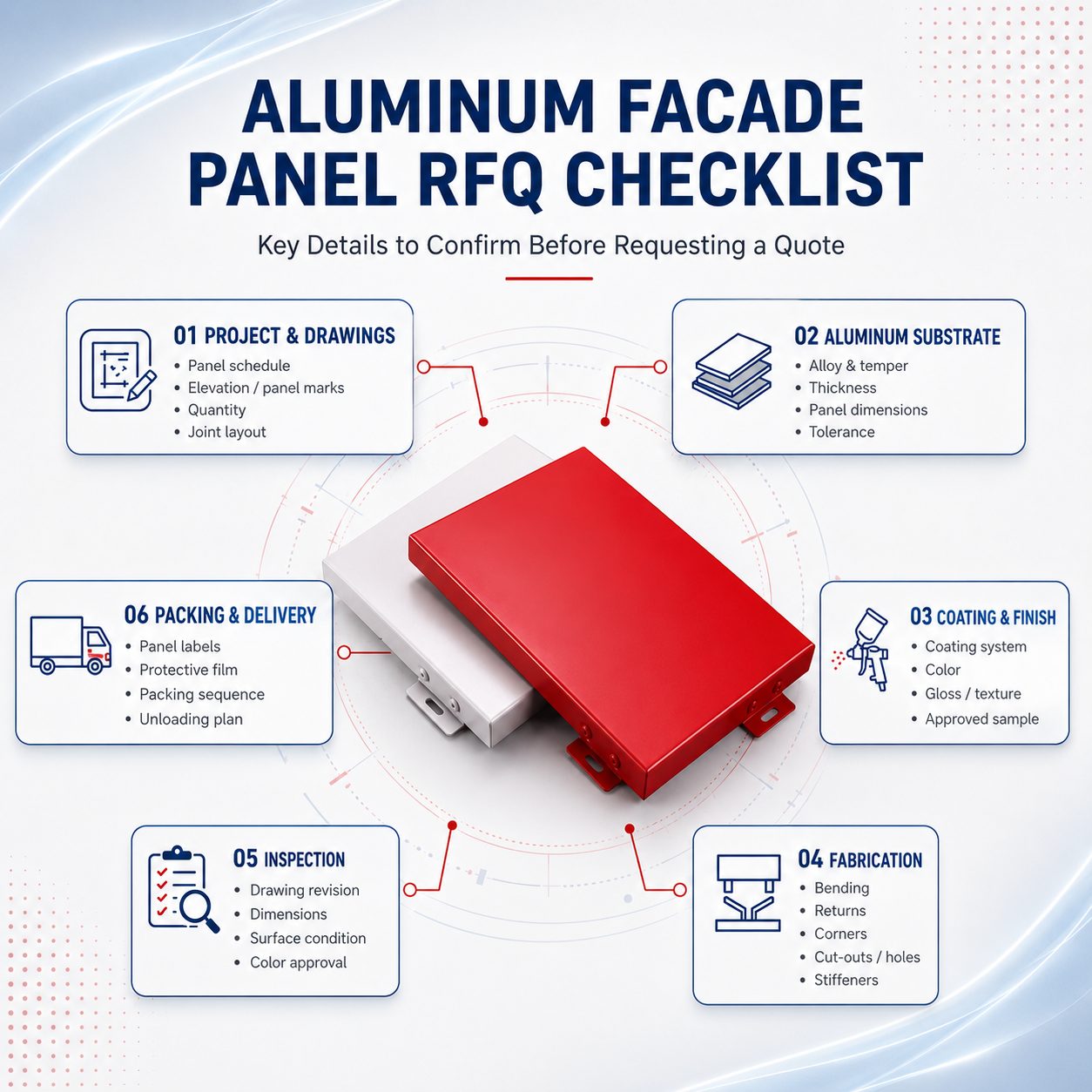
Begin with the elevation drawings, panel schedule and interface details rather than a general request for “aluminum cladding.” Give each panel type a stable identifier and show where it belongs. The supplier then has a clearer basis for reviewing quantities, dimensions and fabrication.
Identify the building elevation, grid and panel mark for every repeated or unique shape.
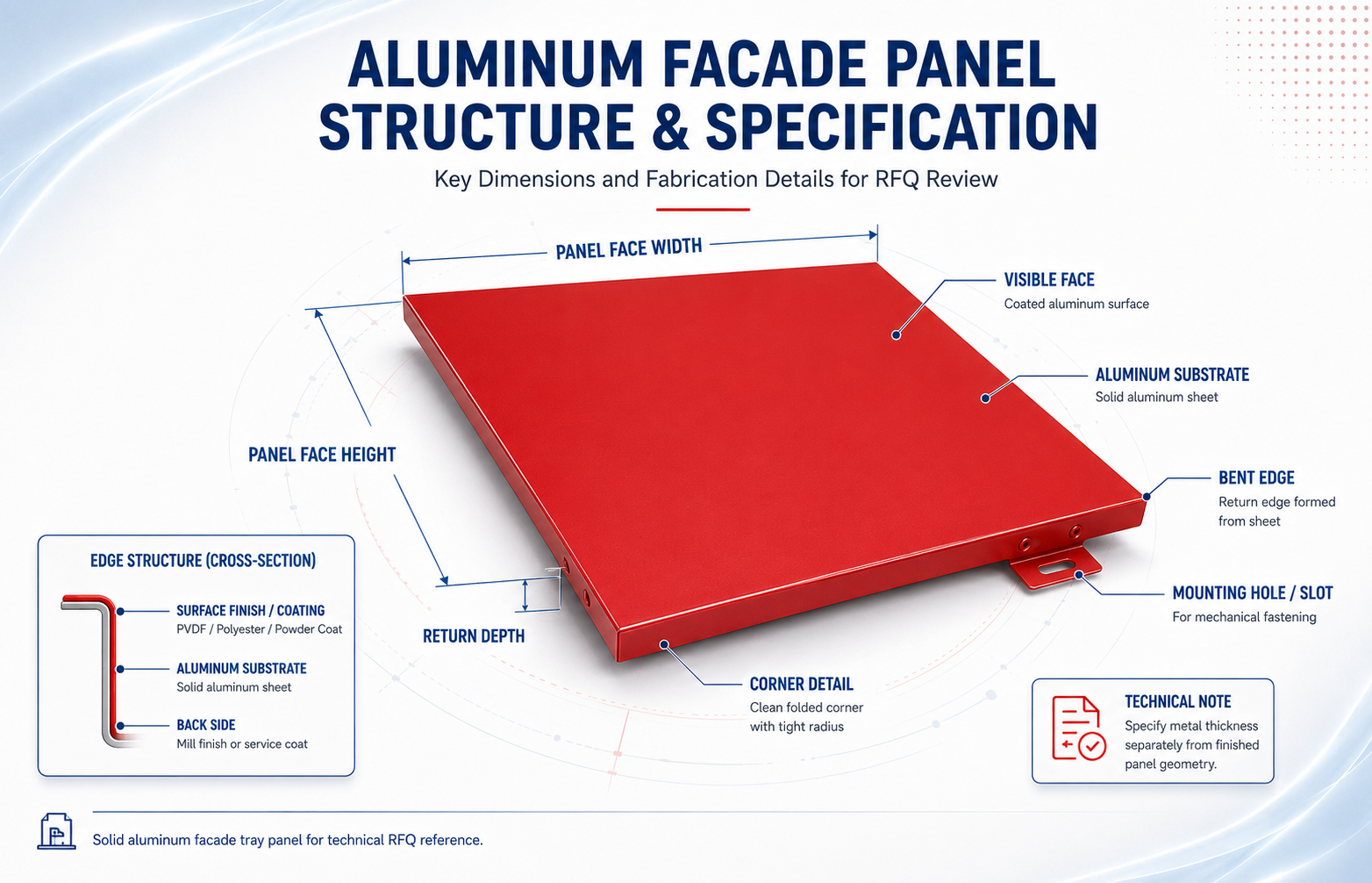
State whether dimensions refer to the visible face, the developed blank or the finished fabricated tray.
Show joint widths, corner conditions, openings, penetrations and interfaces with windows, flashings and other trades.
Separate confirmed production quantities from spare panels, samples and possible future replacements.
Name the party responsible for structural design, attachment design and final drawing approval.
This first step prevents a common mismatch: the buyer prices visible square metres while the fabricator prices developed material, returns, waste, stiffeners and attachment components. Ask bidders to state their measurement basis and exclusions.
Do not select an alloy or temper from a generic article alone. The appropriate combination depends on forming depth, bend radii, panel size, flatness expectations, attachment details and the project specification. If the design already names an alloy and temper, quote them exactly. If it does not, describe the fabrication demand and ask each supplier to identify the offered substrate for technical review.
State whether thickness is nominal substrate thickness before coating and identify the tolerance standard required by the project. For fabricated panels, include face size, return depth, corner construction, hole positions and allowable dimensional tolerances. Avoid using a finished panel thickness as a substitute for the metal substrate thickness.
Large faces, narrow returns, perforations and asymmetric cut-outs can change forming and flatness behaviour. These conditions should be visible in the drawings and reviewed before production. Structural adequacy and attachment spacing must be confirmed by the responsible project professional, not inferred from a catalogue description.
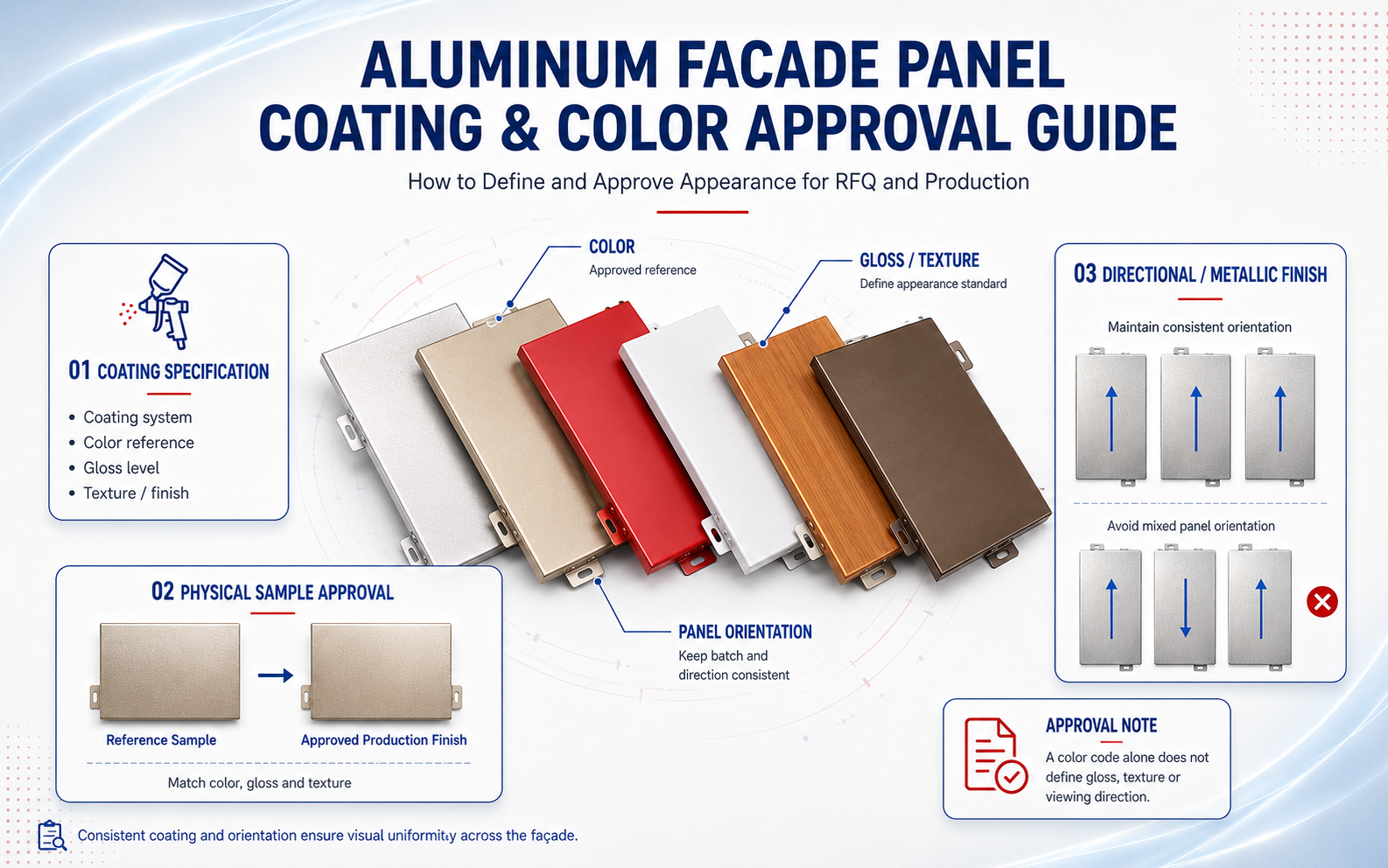
The coating request should follow the project environment and the governing specification. State whether panels are for exterior or interior use and describe relevant exposure conditions. If the project requires a named coating system, standard or verification method, include the exact reference and revision instead of relying on a broad phrase such as “weather resistant.”
Ask the supplier to record the offered coating construction, application side, colour, gloss or texture and any agreed inspection documents in the quotation. A coating family name alone does not define colour tolerance, surface texture, film construction or acceptance criteria.
Give a recognised colour reference when available, but do not assume that a colour code fully describes gloss, metallic orientation or texture. For custom or appearance-critical work, establish an approved physical sample. Record which face is visible, the viewing direction and the agreed comparison conditions.
Metallic and directional finishes also require consistent panel orientation. Mark that orientation on shop drawings, labels and protective film so installers do not rotate visually sensitive panels. If different batches may be installed on one elevation, ask how colour consistency and batch identification will be managed.
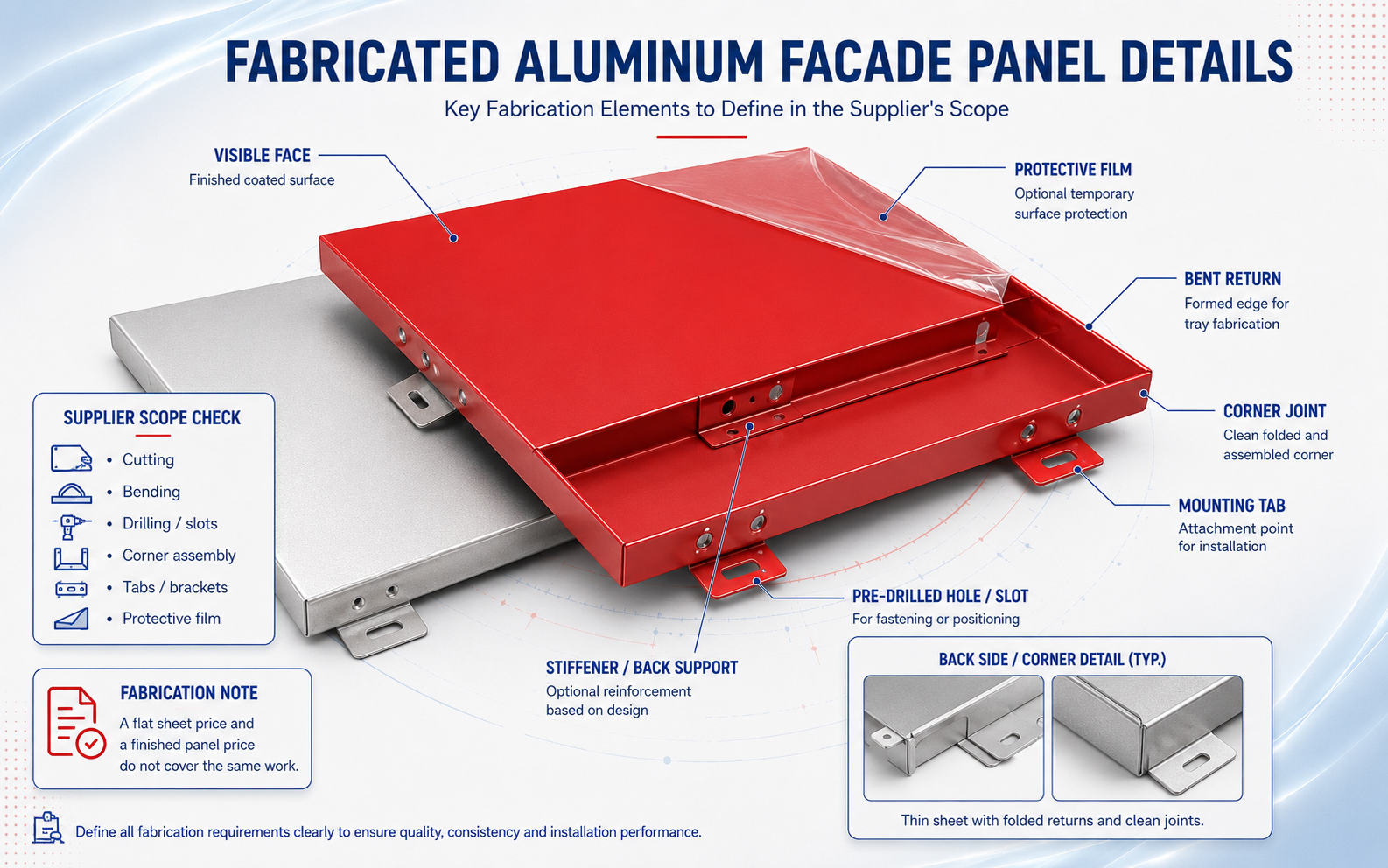
A flat-sheet price and a finished-panel price cover different work. Define whether the supplier will provide blanks, bent trays or fully fabricated panels. The RFQ should identify at least the following items:
panel face dimensions, return depths, bend directions and corner treatment;
stiffeners, mounting tabs, brackets or other components included in the supplier’s scope;
perforations, slots, holes, openings and cut-outs with their positions and tolerances;
welding, riveting, bonding or other joining operations that require project approval;
protective film type, covered face, removal timing and any site limitations;
shop-drawing format, revision control and approval status required before production.
Where the rear construction affects appearance or installation, request a representative fabricated sample rather than approving only a flat colour chip. The sample can reveal bend appearance, corner alignment, visible-face protection and the practical fit of tabs or stiffeners. It does not replace project engineering or formal production inspection.
Agree the inspection reference before manufacturing. Typical checkpoints may include the approved drawing revision, finished dimensions, visible-surface condition, colour sample, panel identifier and the presence of specified fabricated components. Any numerical acceptance value should come from the contract, project standard or an approved technical document.
Labelling should connect each packed panel to the panel schedule. Useful identifiers include project name, elevation, panel mark, orientation, package number and quantity. Labels should remain readable without damaging the visible face or forcing installers to unpack every crate to find one panel.
Describe the transport route, unloading method, storage constraints and installation sequence. Packing should protect finished faces, edges and corners for the agreed journey. If the site needs panels delivered by elevation or installation zone, include that sequence in the order rather than treating it as a late logistics request.
Project scope: building, elevations, application, estimated quantity and delivery destination.
Drawing basis: panel schedule, current revision, panel marks, joint layout and interfaces.
Substrate: required or proposed aluminum alloy, temper, nominal thickness and tolerance basis.
Finished geometry: face dimensions, returns, bends, corners, openings and orientation.
Coating: system required by the project, coated sides, colour, gloss and texture.
Approval sample: colour reference, physical sample, viewing direction and sign-off responsibility.
Fabrication scope: stiffeners, tabs, brackets, holes, joints and shop drawings.
Protection: visible-face film, edge and corner protection, handling limitations and film-removal timing.
Inspection: documents, sample comparison, dimensional checks and agreed hold points.
Logistics: panel labels, package sequence, crate limits, unloading and storage plan.
Commercial comparison: inclusions, exclusions, quantity basis, sample cost and delivery basis.
Technical exceptions: every deviation from the RFQ recorded before order approval.
A code may not settle gloss, texture or metallic direction. Use an approved sample and identify the visible-face orientation.
Clarify whether dimensions describe the face, blank or finished tray. Show tolerances and hole locations on the approved shop drawings.
A panel supplier can review manufacturability within its scope, but project structural design and attachment approval must remain with the responsible parties named in the contract.
Panel finish can be damaged after production if identification, stacking, edge protection or unloading is not planned. Connect the packing list to the installation sequence before shipment.
A reliable facade-panel order is built from aligned drawings, specifications, samples and commercial terms. The checklist makes quotations easier to compare, but the final requirements must come from the project team. Buyers preparing an RFQ can review Worthwill’s aluminum facade cladding panel page, then send the current panel schedule, substrate requirement, coating reference, fabrication scope and packing sequence for confirmation.